The year 2026 marks a pivotal moment for the defense industrial base (DIB). The Cybersecurity Maturity Model Certification (CMMC) 2.0 program, once a distant requirement, is now a firm reality, with its phased implementation reaching a critical juncture. For defense contractors, both prime and subcontractors, CMMC compliance is no longer a matter of if, but when and how. This new reality has profound implications for deal readiness, particularly for companies seeking to engage in mergers and acquisitions (M&A), secure growth capital, or plan for a successful exit.
Investment bankers and financial advisors operating in the defense sector must now consider CMMC compliance as a critical due diligence item. A company’s CMMC level is a direct reflection of its cybersecurity posture and its ability to protect sensitive government information, making it a key indicator of its overall health and attractiveness to potential buyers or investors. This article provides a comprehensive deal readiness checklist for defense contractors, outlining the steps they need to take to prepare for CMMC Level 2 or Level 3 and how CapLinked can facilitate this process.
Table of Contents
ToggleUnderstanding CMMC 2.0: A Primer for the DIB
CMMC 2.0 is a tiered framework designed to protect Federal Contract Information (FCI) and Controlled Unclassified Information (CUI) within the DIB. The program streamlines the previous CMMC 1.0 model into three levels of cybersecurity maturity:
- Level 1 (Foundational): This level applies to contractors that handle only FCI. It requires an annual self-assessment against 17 basic cybersecurity practices.
- Level 2 (Advanced): This level is for contractors that handle CUI. It aligns with the 110 security controls of NIST SP 800-171. Depending on the criticality of the CUI, some contractors may be allowed to perform self-assessments, while others will require a triennial third-party assessment by a CMMC Third-Party Assessment Organization (C3PAO).
- Level 3 (Expert): This level is for contractors that handle CUI associated with the most critical defense programs. It will require a triennial government-led assessment and is based on a subset of NIST SP 800-172 requirements, in addition to the NIST SP 800-171 controls.
As of November 2026, the Department of Defense (DoD) is including CMMC Level 2 requirements in all new solicitations that involve CUI. This means that any defense contractor that wishes to bid on these contracts must have achieved the required CMMC level.
The Deal Readiness Checklist: Preparing for CMMC Level 2/3
For defense contractors preparing for a transaction, demonstrating CMMC compliance is essential. The following checklist outlines the key steps that primes and subs should take to ensure they are deal-ready in the CMMC era.
1. Determine Your Required CMMC Level
The first step is to identify the type of information your company handles and the corresponding CMMC level required. If you handle CUI, you will need to achieve at least CMMC Level 2. If you are involved in high-priority programs, you may need to target Level 3. The DoD provides guidance to help contractors determine their required CMMC level.
2. Conduct a Gap Analysis
Once you have identified your target CMMC level, you need to assess your current cybersecurity posture against the required controls. A gap analysis will help you identify the areas where you are deficient and develop a plan for remediation. There are many resources available to help with this process, including the CMMC Assessment Guide from the DoD.
3. Develop a System Security Plan (SSP)
The SSP is a critical document that describes how your organization implements the security controls required by CMMC. It should be a living document that is regularly updated to reflect changes in your environment. The SSP is a key component of the CMMC assessment process and will be thoroughly reviewed by your C3PAO.
4. Implement Required Security Controls
This is the most time-consuming and resource-intensive part of the CMMC compliance process. You will need to implement the technical, administrative, and physical security controls required by your target CMMC level. This may involve investing in new technologies, updating your policies and procedures, and training your employees. The NIST SP 800-171 provides a detailed list of the security controls required for CMMC Level 2.
5. Engage with a C3PAO (for Level 2 and 3)
If you require a third-party assessment, you will need to engage with an accredited C3PAO. The C3PAO will conduct a thorough assessment of your environment to verify that you have implemented the required security controls. The Cyber AB provides a marketplace of accredited C3PAOs that can assist with your assessment.
6. Maintain Continuous Monitoring
CMMC compliance is not a one-time event. You need to continuously monitor your environment to ensure that your security controls remain effective and that you are prepared for your triennial assessments. This includes regularly scanning for vulnerabilities, managing your Plan of Action and Milestones (POA&M), and staying up-to-date on the latest threats and best practices.
How CapLinked Streamlines CMMC Compliance for Deal Readiness
CapLinked provides a secure and compliant virtual data room (VDR) solution that can help defense contractors streamline their CMMC compliance efforts and prepare for a successful transaction. Here’s how:
- Secure Document Sharing: CapLinked provides a secure environment for sharing sensitive documents, including CUI, with internal and external stakeholders. This is essential for the due diligence process, as it allows potential buyers or investors to review sensitive information without compromising security. CapLinked’s VDR is built on a secure infrastructure that includes encryption in transit and at rest, and it is hosted in a FedRAMP-authorized data center.
- Granular Access Controls: CapLinked allows you to set granular access controls, ensuring that only authorized personnel have access to specific documents. This is a key requirement of CMMC and helps to protect against unauthorized disclosure of CUI. Permissions can be set at the user, group, and document level, providing a high degree of control over who can view, download, and upload sensitive information.
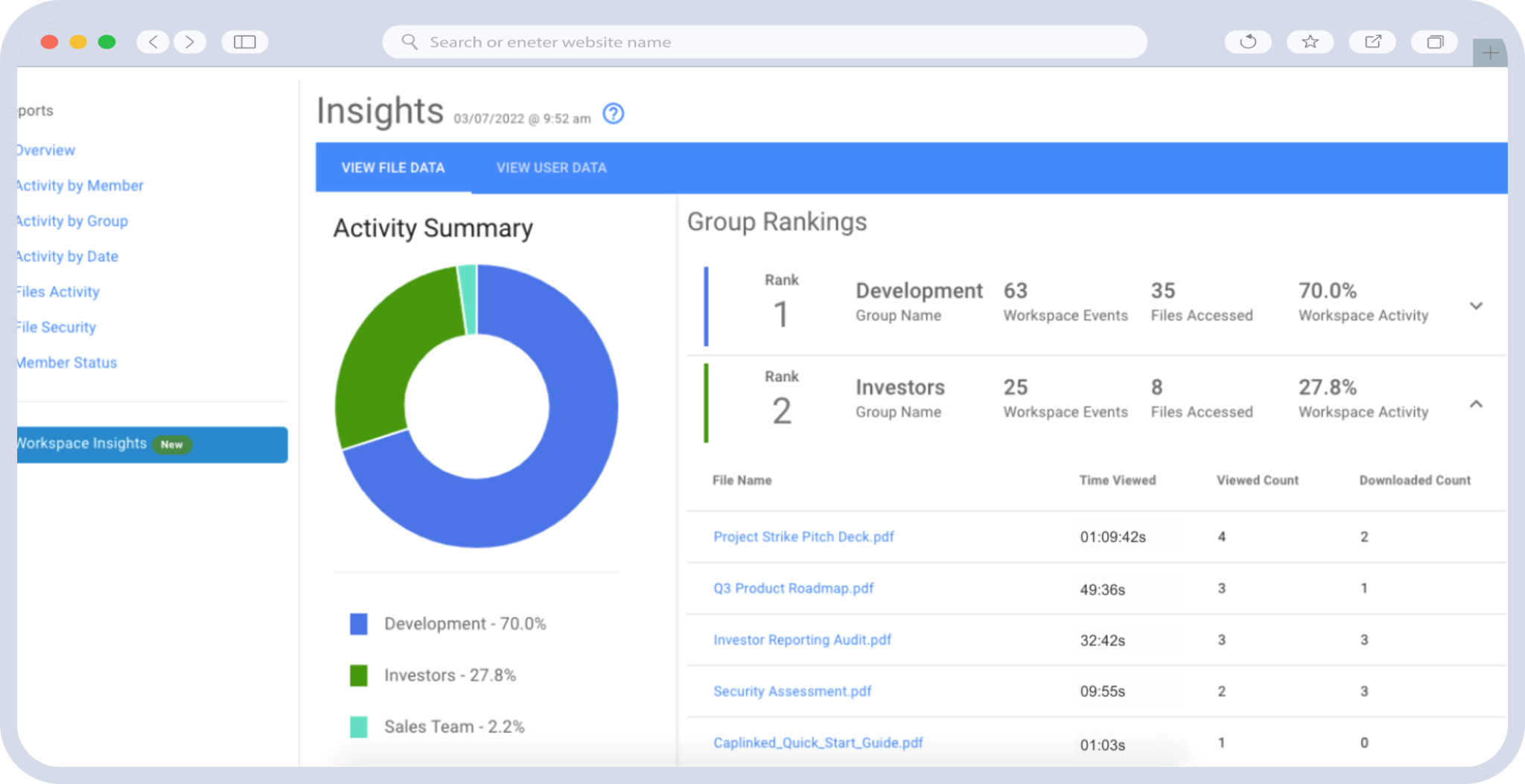
- Comprehensive Audit Trails: CapLinked maintains a complete audit trail of all document activity, providing a detailed record of who has accessed which documents and when. This is essential for demonstrating compliance with CMMC and for providing transparency to potential buyers or investors. The audit trail is immutable and can be easily exported for review by auditors and assessors.
- Centralized Compliance Hub: CapLinked can serve as a centralized hub for all of your CMMC compliance documentation, including your SSP, policies, and procedures. This makes it easy to manage your compliance efforts and to provide evidence of compliance to auditors and assessors. The platform’s version control capabilities ensure that everyone is working with the most up-to-date documents.
Deeper Dive: CMMC Implications for Primes and Subcontractors
The CMMC framework has distinct implications for prime contractors and their subcontractors. Understanding these differences is crucial for effective supply chain management and overall compliance.
Prime Contractor Responsibilities
Prime contractors are the lynchpin of CMMC compliance throughout the defense supply chain. They are not only responsible for their own CMMC certification but also for ensuring that their subcontractors meet the required CMMC level for the information they handle. This flow-down requirement is a significant undertaking and requires a robust supplier risk management program. Prime contractors must clearly define CMMC requirements in their subcontracts, verify the CMMC status of their subcontractors before awarding contracts, and continuously monitor the compliance of their subcontractors throughout the contract lifecycle.
Failure to do so can result in the prime contractor being held responsible for the non-compliance of their subcontractors, which can lead to contract termination, financial penalties, and reputational damage.
Subcontractor Challenges and Opportunities
For subcontractors, CMMC compliance can be a significant challenge, particularly for small and medium-sized businesses (SMBs) that may not have the resources or expertise to implement the required security controls. However, CMMC also presents an opportunity for subcontractors to differentiate themselves from their competitors. By achieving a higher CMMC level, subcontractors can demonstrate their commitment to cybersecurity and become more attractive partners for prime contractors.
The Role of VDRs in CMMC M&A Due Diligence
In the context of M&A, CMMC compliance has become a critical due diligence item. Acquirers are increasingly scrutinizing the cybersecurity posture of their targets to assess the risks and potential liabilities associated with a transaction. A VDR can play a crucial role in facilitating CMMC-related due diligence by providing a secure and controlled environment for sharing sensitive information.
Key CMMC Due Diligence Questions
When conducting due diligence on a target company, acquirers should ask a number of key questions related to CMMC, including: What is the target’s required CMMC level? Has the target conducted a CMMC gap analysis? Does the target have a system security plan (SSP)? What is the status of the target’s CMMC implementation? Has the target engaged with a C3PAO?
How a VDR Facilitates CMMC Due Diligence
A VDR can help to streamline the CMMC due diligence process in a number of ways. It can securely share CMMC documentation, such as the SSP, gap analysis, and POA&M. It can track user activity by providing a complete audit trail of all user activity, allowing the acquirer to see who has accessed which documents and when. It can facilitate Q&A by managing the communication between the acquirer and the target, ensuring that all questions and answers are documented.
By using a VDR for CMMC due diligence, acquirers can gain a comprehensive understanding of the target’s cybersecurity posture and make more informed investment decisions.
The Future of CMMC and the DIB
CMMC is not a static framework. It will continue to evolve over time to address the changing threat landscape and the evolving needs of the DoD. Defense contractors must be prepared to adapt to these changes and to continuously improve their cybersecurity posture. By embracing a culture of security and by leveraging the right tools and technologies, defense contractors can not only meet the requirements of CMMC but also gain a competitive advantage in the marketplace.
Conclusion: CMMC as a Strategic Advantage
In the competitive landscape of the defense industry, CMMC compliance is more than just a regulatory hurdle; it is a strategic advantage. Companies that can demonstrate a strong cybersecurity posture and a commitment to protecting sensitive government information will be more attractive to potential buyers and investors. By following the deal readiness checklist outlined in this article and leveraging the power of CapLinked, defense contractors can position themselves for success in the CMMC era.