For cloud service providers (CSPs) and software-as-a-service (SaaS) vendors, achieving a Federal Risk and Authorization Management Program (FedRAMP) authorization is a monumental achievement. It signifies a commitment to the highest standards of security and compliance, and it opens the door to the vast and lucrative federal market. However, the journey does not end with the initial Authorization to Operate (ATO). In fact, it is just the beginning. The ongoing process of continuous monitoring (ConMon) is a critical and often challenging aspect of maintaining a FedRAMP authorization.
In 2026, with the increasing adoption of cloud services by federal agencies and the ever-evolving threat landscape, the rigor and importance of FedRAMP continuous monitoring have only intensified. Cloud vendors are under constant pressure to demonstrate that their security posture remains strong and that they are proactively managing risks. This article will explore the challenges that cloud vendors face in the FedRAMP ConMon process and how a secure collaboration platform like CapLinked can simplify and streamline this critical aspect of compliance.
Table of Contents
ToggleThe Intricacies of Continuous Monitoring
FedRAMP’s continuous monitoring requirements are designed to ensure that authorized cloud services maintain an acceptable security posture on an ongoing basis. This involves a regular cycle of security assessments, reporting, and remediation. The key activities include monthly vulnerability scanning, Plan of Action and Milestones (POA&M) management, annual assessments, and reporting to the FedRAMP PMO.
Monthly vulnerability scanning is a requirement for all CSPs, where operating systems, web applications, and databases must be scanned for vulnerabilities on a monthly basis. Any vulnerabilities identified during the scanning process must be documented in a POA&M, and a plan for remediation must be established. An annual security assessment must be conducted by a CMMC Third-Party Assessment Organization (C3PAO) to provide an independent verification of the CSP’s security posture. CSPs are required to submit regular reports to the FedRAMP Program Management Office (PMO) and their sponsoring agencies, detailing their ConMon activities and the status of their security controls.
The Challenges for Cloud Vendors
The FedRAMP ConMon process can be a significant operational burden for cloud vendors. Some of the key challenges include collaboration with 3PAOs, packaging and submitting monthly scan data, and maintaining an audit trail. The annual assessment requires close collaboration with a 3PAO, which involves sharing large volumes of sensitive information, including system architecture diagrams, security policies, and vulnerability scan reports. Managing this collaboration in a secure and efficient manner can be challenging. The monthly vulnerability scans generate a large amount of data that must be collected, organized, and submitted to the FedRAMP PMO. This can be a time-consuming and error-prone process, especially for large and complex cloud environments. It is essential to maintain a complete and accurate audit trail of all ConMon activities, which is not only a requirement of FedRAMP but also a best practice for good governance and risk management.
Streamlining FedRAMP ConMon with CapLinked
CapLinked provides a secure and centralized platform that can help cloud vendors overcome the challenges of FedRAMP continuous monitoring. By leveraging CapLinked, vendors can streamline their ConMon workflows, improve collaboration with 3PAOs, and enhance their overall security and compliance posture.
Secure Collaboration with 3PAOs
CapLinked provides a secure virtual data room (VDR) where cloud vendors can share sensitive information with their 3PAOs. This eliminates the need for insecure email attachments and provides a single, controlled environment for all assessment-related collaboration. Granular access controls ensure that 3PAOs only have access to the information they need to see, and a complete audit trail tracks all document activity.
Centralized Repository for Scan Data and Evidence
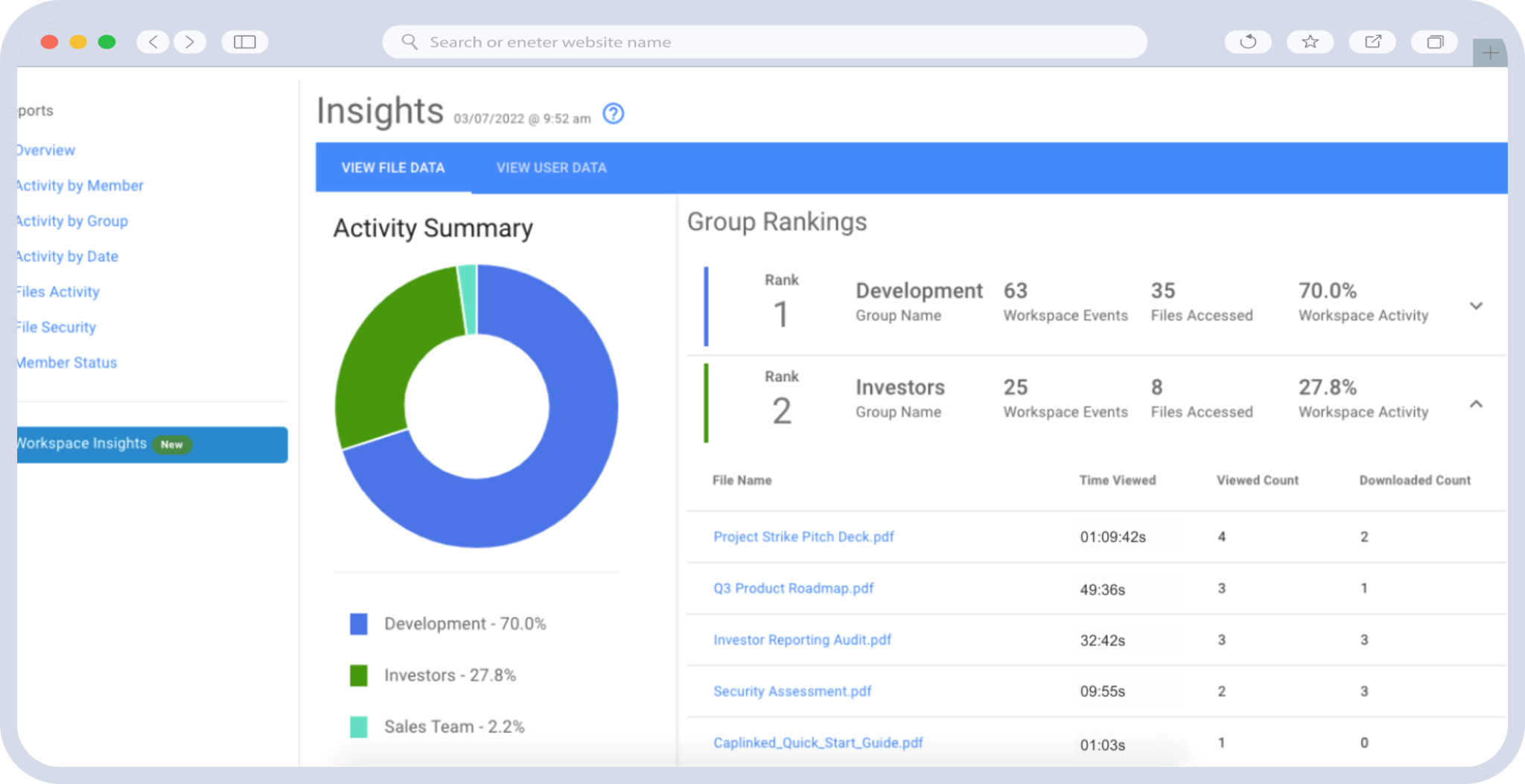
CapLinked can serve as a centralized repository for all FedRAMP ConMon documentation, including monthly vulnerability scan reports, POA&Ms, and other evidence of compliance. This makes it easy to organize and package the information for submission to the FedRAMP PMO. The platform’s version control capabilities ensure that everyone is working with the most up-to-date documents.
Simplified Submission Process
By using CapLinked to manage their ConMon documentation, cloud vendors can simplify the process of submitting their monthly and annual reports to the FedRAMP PMO. The platform’s intuitive interface and robust features make it easy to compile the necessary information and to share it with the relevant stakeholders in a secure and auditable manner.
Enhanced Auditability and Compliance
The comprehensive audit trails in CapLinked provide a detailed record of all ConMon activities. This is invaluable for demonstrating compliance with FedRAMP requirements and for responding to requests from auditors and assessors. The audit trails are immutable and can be easily exported for review.
The Future of FedRAMP: Automation and Orchestration
The FedRAMP program is constantly evolving to keep pace with the changing threat landscape and the evolving needs of the federal government. One of the key trends in the future of FedRAMP is the increasing use of automation and orchestration to streamline the compliance process. By automating many of the manual tasks associated with FedRAMP compliance, cloud vendors can reduce their administrative burden, improve their efficiency, and enhance their overall security and compliance posture.
Automating Vulnerability Scanning and Reporting
There are a number of tools available that can be used to automate the process of vulnerability scanning and reporting. These tools can be configured to automatically scan for vulnerabilities on a regular basis and to generate reports that can be submitted to the FedRAMP PMO. By automating this process, cloud vendors can save a significant amount of time and effort.
Orchestrating Security Workflows
Security orchestration, automation, and response (SOAR) platforms can be used to orchestrate security workflows and to automate the response to security incidents. For example, a SOAR platform can be configured to automatically open a ticket in a help desk system when a new vulnerability is discovered, and to assign the ticket to the appropriate team for remediation. By orchestrating security workflows, cloud vendors can improve their response times and to reduce the risk of human error.
Deeper Dive: The Challenges of POA&M Management
The Plan of Action and Milestones (POA&M) is a critical component of the FedRAMP continuous monitoring process. It is a living document that tracks all of the vulnerabilities that have been identified in a cloud service offering (CSO), and the plan for remediating them. Effective POA&M management is essential for maintaining a FedRAMP authorization, but it can also be a significant challenge for cloud vendors.
The POA&M Lifecycle
The POA&M lifecycle begins when a new vulnerability is discovered. The vulnerability is then added to the POA&M, and a plan for remediation is established. The remediation plan should include a description of the vulnerability, the steps that will be taken to remediate it, and a timeline for completion. Once the vulnerability has been remediated, the POA&M is updated to reflect the new status.
The Challenges of POA&M Management
There are a number of challenges associated with POA&M management. A large and complex CSO can have hundreds or even thousands of vulnerabilities, and tracking all of these vulnerabilities in a POA&M can be a significant administrative burden. Not all vulnerabilities are created equal; some vulnerabilities are more critical than others and need to be remediated more quickly. Prioritizing vulnerabilities and allocating resources accordingly can be a challenge. POA&M management often involves collaboration between multiple teams, including security, operations, and development. Ensuring that everyone is on the same page and that the POA&M is kept up-to-date can be difficult. Cloud vendors are required to submit regular reports to the FedRAMP PMO on the status of their POA&M. Generating these reports can be a time-consuming and error-prone process.
How a VDR Can Help
A VDR like CapLinked can help to streamline the POA&M management process. It can be used to create a centralized repository for all POA&M documentation, making it easy to track the status of all vulnerabilities and to collaborate with other teams. A VDR provides version control capabilities, ensuring that everyone is working with the most up-to-date version of the POA&M. A VDR can be used to generate reports on the status of the POA&M, which can save a significant amount of time and effort.
The Role of 3PAOs in Continuous Monitoring
Third-Party Assessment Organizations (3PAOs) play a critical role in the FedRAMP continuous monitoring process. 3PAOs are independent organizations that are accredited by the American Association for Laboratory Accreditation (A2LA) to conduct security assessments of CSOs. The annual security assessment conducted by a 3PAO is a key component of the FedRAMP continuous monitoring process.
The 3PAO Assessment Process
The 3PAO assessment process begins with a review of the CSO’s security documentation, including the system security plan (SSP), the POA&M, and the results of the monthly vulnerability scans. The 3PAO then conducts a series of interviews with the CSO’s security and operations teams, and performs a technical assessment of the CSO’s security controls. The 3PAO then prepares a security assessment report (SAR) that details their findings and recommendations.
The Importance of a Good Working Relationship with Your 3PAO
A good working relationship with your 3PAO is essential for a successful FedRAMP continuous monitoring program. A good 3PAO will be a true partner in your compliance efforts, providing you with valuable feedback and guidance on how to improve your security posture. When selecting a 3PAO, it is important to look for an organization that has a deep understanding of the FedRAMP program and that has a proven track record of success.
How to Prepare for a FedRAMP Annual Assessment
The FedRAMP annual assessment is a major undertaking, and it is important to be well-prepared. Start early and don’t wait until the last minute to start preparing for your annual assessment. Give yourself plenty of time to gather the necessary documentation and to address any outstanding issues. Before you engage with a 3PAO, conduct a self-assessment to identify any potential issues. This will give you an opportunity to address these issues before the 3PAO begins their assessment. Make sure that all of your security documentation is up-to-date and readily available, including your SSP, your POA&M, and the results of your monthly vulnerability scans. The 3PAO will want to interview your security and operations teams. Make sure that your team is prepared to answer their questions and to provide them with the information they need.
By following these steps, you can help to ensure a smooth and successful FedRAMP annual assessment.
Conclusion: A Proactive Approach to FedRAMP Compliance
In the dynamic and demanding world of federal cloud computing, a proactive and efficient approach to FedRAMP continuous monitoring is essential. By leveraging a secure collaboration platform like CapLinked, and by embracing the power of automation and orchestration, cloud vendors can streamline their ConMon workflows, reduce their administrative burden, and enhance their overall security and compliance posture. This not only helps them to maintain their FedRAMP authorization but also allows them to focus on what they do best: delivering innovative and secure cloud solutions to the U.S. government.