Mergers and acquisitions are complex transactions that require extensive due diligence. Buyers must review hundreds or thousands of documents to understand the target company’s financial health, legal obligations, operational capabilities, and risks. This due diligence process is critical for making informed acquisition decisions and identifying potential issues before closing.
Historically, due diligence was conducted in physical data rooms where buyers and their advisors reviewed documents in person. Today, virtual data rooms (VDRs) have become the standard for M&A due diligence, enabling remote access to documents while maintaining security and control. This guide explains how VDRs streamline M&A due diligence and what features are most valuable for M&A transactions.
Table of Contents
ToggleThe M&A Due Diligence Process
M&A due diligence typically involves several phases:
Information Request: The buyer’s legal and financial advisors prepare a detailed information request (sometimes called a “data request”) identifying the documents and information they need from the target company. This might include financial statements, contracts, employee records, intellectual property documentation, litigation history, and regulatory filings.
Document Collection: The target company’s management and advisors collect the requested documents and organize them for review.
Document Upload: Documents are uploaded to a VDR where buyers and their advisors can access them.
Document Review: Buyers and their advisors review documents, ask questions, and identify issues or concerns.
Q&A Process: The seller responds to questions and clarifications through the VDR’s Q&A function.
Final Review: Buyers conduct final review of critical documents before closing.
Closing: Once due diligence is complete and issues are resolved, the transaction closes.
Throughout this process, VDRs play a critical role in managing document access, maintaining security, and facilitating collaboration.
Key VDR Features for M&A Due Diligence
Effective VDRs for M&A transactions include several critical features:
Granular Access Controls: VDRs should allow sellers to grant different access levels to different parties. For example:
- Buyers’ legal team can access all documents
- Buyers’ financial team can access financial documents only
- Lenders can access financial and collateral documents only
- Regulatory advisors can access compliance documents only
This granular control protects sensitive information while allowing appropriate access to relevant parties.
Document Organization: VDRs should support hierarchical document organization that mirrors the information request structure. This allows reviewers to quickly find relevant documents.
Q&A Functionality: VDRs should include Q&A functionality that allows reviewers to ask questions and sellers to respond. This creates an audit trail of questions and answers that can be referenced later.
Audit Logging: VDRs should maintain comprehensive audit logs showing who accessed what documents and when. This provides visibility into the review process and can identify if sensitive documents were accessed inappropriately.
Watermarking and Print Controls: VDRs should support document watermarking and print controls to prevent unauthorized copying or sharing of documents.
Search Functionality: VDRs should support full-text search to allow reviewers to quickly find relevant documents across the entire data room.
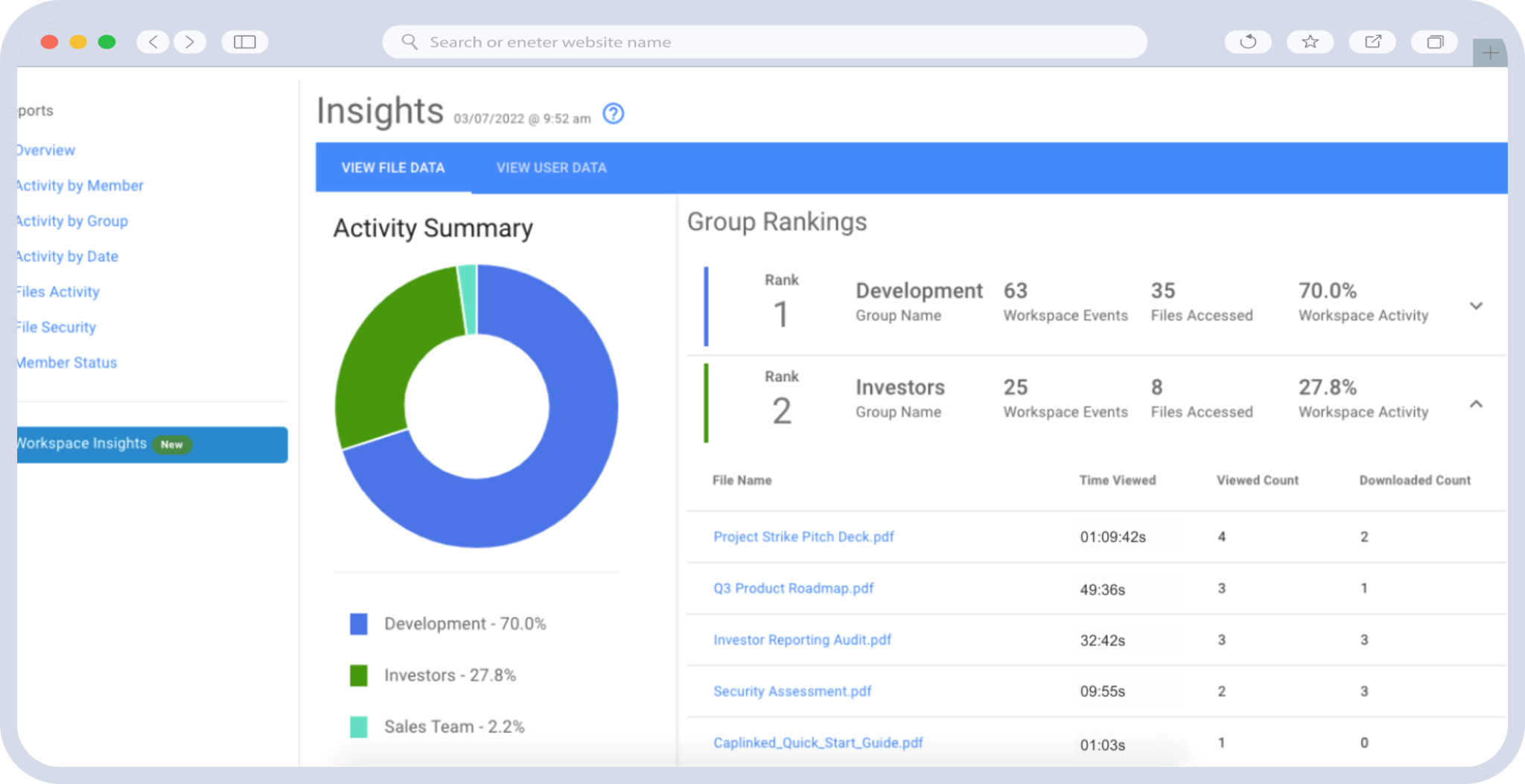
Reporting and Analytics: VDRs should provide reporting on document access patterns, reviewer activity, and Q&A status to help track due diligence progress.
Benefits of VDRs for M&A Due Diligence
VDRs provide several significant benefits for M&A due diligence:
Remote Access: VDRs enable remote access to documents, eliminating the need for buyers and advisors to travel to a physical location. This is particularly valuable for international transactions where travel would be expensive and time-consuming.
24/7 Availability: VDRs are available 24/7, allowing reviewers to access documents on their schedule rather than during limited business hours.
Scalability: VDRs can accommodate large numbers of documents and reviewers without performance degradation. A typical M&A VDR might contain 10,000-100,000 documents accessible to 50-500 reviewers.
Security: VDRs provide security controls that protect sensitive information from unauthorized access or copying. This is particularly important for transactions involving proprietary information or regulated data.
Audit Trail: VDRs maintain comprehensive audit trails that document all access to documents. This provides evidence of proper document handling and can be valuable if disputes arise after closing.
Cost Efficiency: VDRs reduce costs compared to physical data rooms by eliminating travel expenses and reducing the need for on-site staff to manage document access.
Transaction Acceleration: By streamlining document access and Q&A processes, VDRs can accelerate due diligence timelines, enabling faster transaction completion.
VDRs for Complex M&A Scenarios
For complex M&A scenarios, VDRs offer additional capabilities:
Multi-Jurisdictional Transactions: For transactions involving multiple jurisdictions, VDRs can organize documents by jurisdiction and provide appropriate access controls for different regulatory requirements.
Regulatory Compliance: For transactions in regulated industries (healthcare, finance, etc.), VDRs can support compliance requirements by maintaining audit trails and access controls.
GovCloud Deployments: For transactions involving government contracts or AWS GovCloud infrastructure, VDRs can be deployed on GovCloud to meet compliance requirements.
Sensitive Information Handling: For transactions involving classified information or highly sensitive data, VDRs can implement additional security controls such as:
- IP-based access restrictions
- Time-limited access windows
- Watermarking with reviewer identification
- Prohibition of copying or printing
VDR Best Practices for M&A Transactions
Organizations conducting M&A transactions should follow these VDR best practices:
Plan Document Organization: Before uploading documents, plan the VDR structure to mirror the information request. This makes it easier for reviewers to find relevant documents.
Implement Access Controls: Implement granular access controls that provide appropriate access to different parties while protecting sensitive information.
Use Watermarking: Enable watermarking to discourage unauthorized copying and to identify the source if documents are leaked.
Monitor Access: Monitor document access patterns to identify if reviewers are accessing unexpected documents or if suspicious access patterns emerge.
Maintain Q&A Discipline: Use the Q&A function consistently to create an audit trail of questions and answers. This is valuable for post-closing disputes.
Establish Document Retention Policies: Establish clear policies for how long documents will be retained in the VDR after closing. This is important for compliance and litigation hold purposes.
Train Users: Ensure all VDR users understand how to use the platform, what documents they can access, and the importance of maintaining document security.
Evaluating VDR Providers for M&A
When evaluating VDR providers for M&A transactions, consider:
M&A Experience: Does the provider have experience with M&A transactions? Can they provide references from other M&A transactions?
Security and Compliance: Does the provider maintain SOC 2 Type II and ISO 27001 certifications? Can they support GovCloud deployments if needed?
Feature Set: Does the provider offer the features needed for your transaction (granular access controls, Q&A functionality, audit logging, watermarking)?
Scalability: Can the provider handle the volume of documents and reviewers your transaction requires?
Support: Does the provider offer 24/7 support for time-sensitive transactions?
Pricing: Does the provider’s pricing model align with your transaction size and budget?
Conclusion
VDRs have become essential tools for M&A due diligence, enabling secure, efficient document sharing and collaboration. By selecting a VDR provider with strong M&A experience, robust security controls, and comprehensive features, organizations can streamline due diligence, reduce costs, and accelerate transaction timelines.
For organizations conducting M&A transactions in 2026, VDRs are no longer optional—they’re a critical component of the transaction process. By leveraging VDR capabilities effectively, organizations can conduct more thorough due diligence, identify and address issues more quickly, and close transactions more efficiently.
About CapLinked: CapLinked is a leading VDR provider for M&A transactions, with over a decade of experience managing complex deals. Our platform provides the security, scalability, and features needed for enterprise M&A transactions, including support for GovCloud deployments and highly regulated industries.