The Convergence of Compliance, Legal, and Finance
In 2026, the role of the virtual data room (VDR) has transcended its traditional use as a transaction facilitation tool. For many organizations, particularly those in highly regulated industries, the VDR has evolved into something far more strategic: a compliance command center. This is the centralized hub where legal teams, finance teams, compliance officers, and auditors converge to manage the complex and ever-growing demands of regulatory compliance, audit preparation, and stakeholder reporting.
The regulatory environment has become increasingly complex and demanding. Organizations must navigate a labyrinth of regulations, from SEC climate disclosure requirements to ESG reporting standards, from HIPAA compliance to GDPR requirements. In this environment, the ability to centralize, organize, and manage compliance documentation is not just a nice-to-have; it is a business imperative.
This article will explore how legal and finance teams are leveraging VDRs to centralize audit prep, ESG documentation, and regulator-facing reporting, and how this evolution is transforming the VDR from a transaction tool into a strategic compliance asset.
The Expanding Compliance Landscape
The compliance landscape has expanded dramatically in recent years. Organizations are now subject to a growing array of regulations and reporting requirements, each with its own specific documentation, audit trails, and reporting deadlines. Some of the key compliance areas that organizations must manage include environmental, social, and governance (ESG) reporting, audit preparation, and regulatory reporting.
ESG regulations are becoming increasingly stringent, with new requirements in multiple jurisdictions. Organizations must now document and report on their environmental impact, social responsibility initiatives, and governance practices. Organizations must prepare for regular audits by external auditors, regulatory bodies, and internal audit teams. This requires the collection and organization of vast amounts of documentation, from financial records to policy documents. Organizations must submit regular reports to regulatory bodies, providing evidence of compliance with applicable regulations. These reports often require the compilation of large volumes of data and documentation.
The VDR as a Compliance Command Center
A VDR can serve as a centralized hub for all compliance-related activities. By consolidating compliance documentation in a single, secure location, organizations can streamline their compliance efforts, improve their efficiency, and reduce the risk of non-compliance.
Centralized Documentation Repository
A VDR provides a single, secure repository for all compliance-related documentation. This includes audit workpapers, ESG reports, policy documents, evidence of control implementation, and regulatory correspondence. By centralizing this documentation, organizations can ensure that all stakeholders have access to the most up-to-date information and can easily locate the documentation they need.
Organized Folder Structure and Indexing
A well-organized VDR can be structured to mirror the organization’s compliance framework. For example, folders can be organized by regulation, by control, or by audit cycle. Advanced search and indexing capabilities allow users to quickly locate specific documents or evidence of compliance.
Version Control and Audit Trails
VDRs provide version control capabilities, ensuring that all stakeholders are working with the most current versions of documents. Comprehensive audit trails track all document activity, providing a detailed record of who has accessed which documents and when. This is essential for demonstrating compliance and for responding to regulatory inquiries.
Secure Collaboration with Auditors and Regulators
A VDR provides a secure environment for sharing compliance documentation with external auditors and regulatory bodies. Rather than sending sensitive documents via email or using insecure file-sharing services, organizations can grant auditors and regulators secure access to the VDR, with granular controls over what they can see and do.
Real-Time Reporting and Analytics
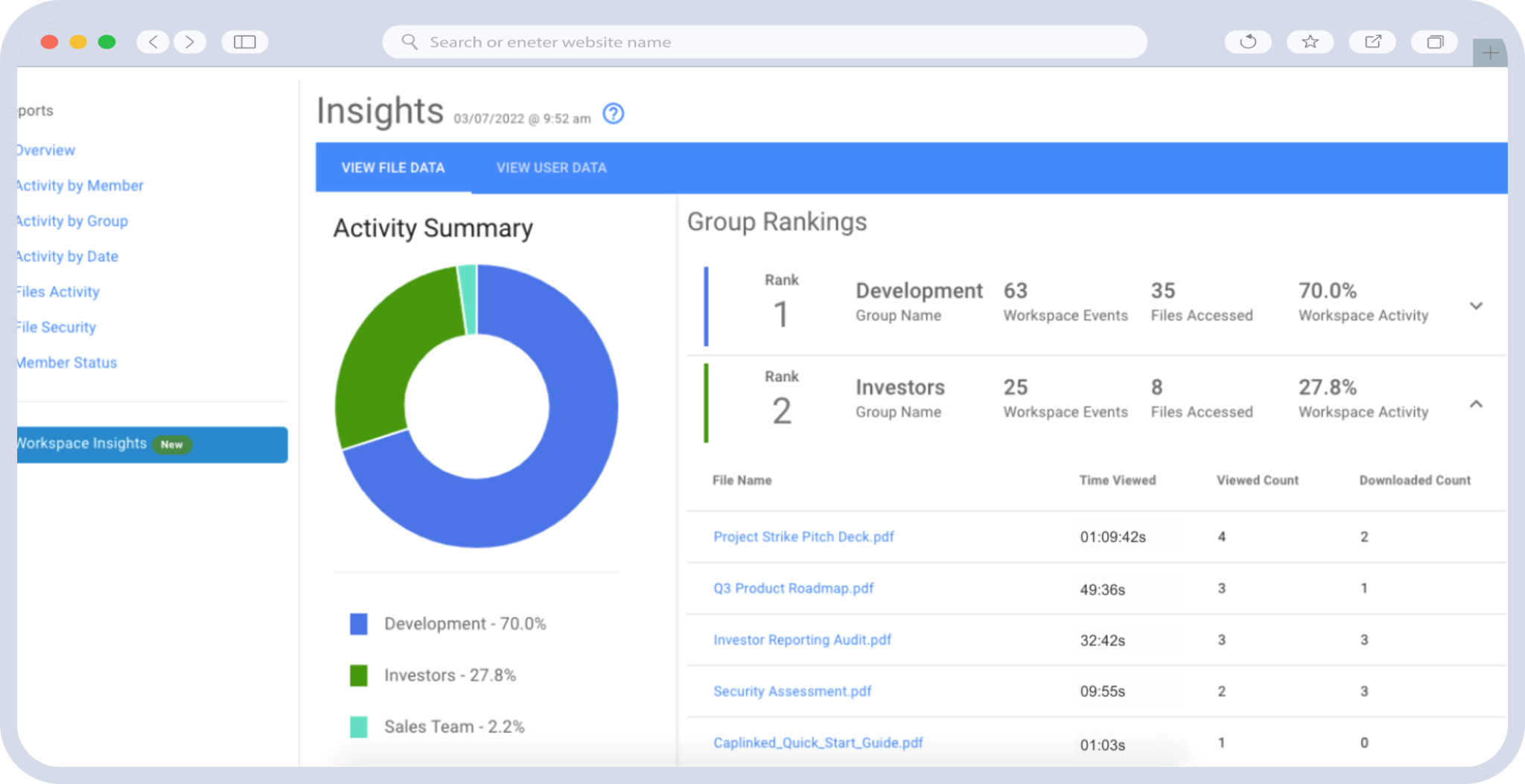
Modern VDRs can provide real-time reporting and analytics on compliance status. This allows compliance officers to quickly identify areas of non-compliance, track remediation efforts, and provide regular updates to senior management and the board of directors.
ESG Documentation and Reporting
One of the most significant compliance challenges in 2026 is ESG reporting. Organizations are increasingly required to document and report on their environmental impact, social responsibility initiatives, and governance practices. Key considerations for the 2026 annual reporting season include ESG, AI, cybersecurity, and DEI.
A VDR can serve as the central repository for all ESG-related documentation. This includes environmental impact assessments, carbon footprint calculations, diversity and inclusion metrics, board composition information, and executive compensation data. By centralizing this documentation, organizations can more easily prepare their ESG reports and respond to investor inquiries.
Audit Preparation and Execution
Audit preparation is a critical compliance activity, and it can be a significant burden on organizations. A VDR can streamline the audit preparation process by providing a centralized location for all audit-related documentation. This includes audit planning documentation, control documentation, audit workpapers, and management responses.
A comprehensive audit checklist can help organizations ensure that they are prepared for their audits. By using a VDR as a compliance command center, organizations can proactively collect and organize the documentation required for an audit throughout the year. This avoids the last-minute scramble to gather information when the audit is announced. A VDR provides a secure and controlled environment for collaborating with auditors. Organizations can grant auditors access to specific documents and track their activity in the data room. This eliminates the need for insecure email attachments and provides a complete audit trail of all auditor activity. The Q&A module in a VDR can be used to manage the communication between the organization and the auditors. This ensures that all questions and answers are documented and that there is a clear record of all communication.
Regulatory Reporting and Compliance Monitoring
Organizations are required to submit regular reports to regulatory bodies, providing evidence of compliance with applicable regulations. A VDR can facilitate this process by providing a centralized location for all regulatory reporting documentation. This includes compliance evidence, regulatory correspondence, and compliance certifications.
Understanding regulatory reporting requirements is essential for organizations that are subject to regulatory oversight. A VDR can contain evidence of compliance with specific regulatory requirements, such as policy documents, training records, and system configurations. A VDR can contain all correspondence with regulatory bodies, including inquiries, responses, and enforcement actions. A VDR can contain compliance certifications and attestations, such as SOC 2 reports or FedRAMP authorizations.
The Role of Legal and Finance Teams
Legal and finance teams play a critical role in compliance management, and they are increasingly leveraging VDRs to streamline their compliance efforts. Legal teams use VDRs to manage contract compliance, regulatory correspondence, and litigation support. Finance teams use VDRs to manage financial compliance, tax documentation, and audit preparation.
By providing a centralized platform for collaboration, VDRs enable legal and finance teams to work more efficiently and to reduce the risk of compliance failures. The ability to grant secure access to external advisors, such as auditors and legal counsel, further enhances the value of the VDR as a compliance tool.
Best Practices for Using a VDR as a Compliance Command Center
To maximize the value of a VDR as a compliance command center, organizations should establish a clear governance framework that defines roles and responsibilities for compliance management, and establishes clear procedures for document management and approval. Organizations should use a consistent folder structure and naming convention to organize compliance documentation, which will make it easier for users to locate the documentation they need. Use granular access controls to ensure that users only have access to the compliance documentation they need to see. This is particularly important when sharing documentation with external parties. Ensure that the VDR maintains comprehensive audit trails of all document activity. This is essential for demonstrating compliance and for responding to regulatory inquiries. Compliance documentation should be regularly reviewed and updated to ensure that it remains accurate and current. Ensure that all users are trained on how to use the VDR and understand the importance of compliance documentation.
The Future of Compliance Management
As regulatory requirements continue to evolve and become more complex, the role of the VDR as a compliance command center will continue to grow. Organizations that embrace this evolution and invest in VDR solutions that support compliance management will be better positioned to meet their regulatory obligations and to respond to regulatory inquiries.
Conclusion: The VDR as a Strategic Compliance Asset
In 2026, the VDR has evolved from a transaction facilitation tool into a strategic compliance asset. By centralizing compliance documentation, streamlining audit preparation, and facilitating secure collaboration with auditors and regulators, VDRs are helping organizations to meet their compliance obligations more efficiently and effectively. For legal and finance teams, the VDR has become an indispensable tool for managing the complex and ever-growing demands of regulatory compliance.