A poorly organized virtual data room doesn’t just slow down due diligence — it kills deals. When buyers encounter disorganized folders, mislabeled files, and missing documents, they lose confidence in the target company, extend timelines, and frequently reduce offer valuations. Research from Deloitte’s M&A Trends Report consistently shows that deal execution speed is a top priority for acquirers — and nothing derails speed like chaotic document management. The reality is that proper virtual data room document organization can reduce due diligence review time by 30–40%, minimize costly errors, and compress closing timelines by weeks. This guide gives deal teams the practical, step-by-step framework to get it right.
Table of Contents
ToggleWhy Virtual Data Room Document Organization Is the Hidden Driver of Deal Success
Most deal teams invest significant time evaluating VDR security features, pricing models, and user interfaces — and rightfully so. But document organization within the data room is the operational factor that determines whether due diligence runs smoothly or becomes a grinding, frustrating process that erodes trust between parties.
Consider the mechanics of a typical M&A transaction. Buyers, their legal counsel, financial advisors, accountants, and sometimes regulatory bodies all need to review hundreds or thousands of documents across dozens of categories. If your VDR folder structure is logical, consistent, and intuitive, reviewers find what they need quickly, ask fewer clarifying questions, and move through their checklists efficiently. If it’s not, every participant wastes hours searching, requesting clarification, and second-guessing whether they’ve reviewed everything material.
According to the American Bar Association’s Business Law Section, incomplete or disorganized due diligence documentation is among the most commonly cited reasons for deal delays and post-closing disputes. The stakes are real, and the solution starts with how you organize your data room before the first reviewer ever logs in.
Building Your VDR Folder Structure: The Foundation of Efficient Due Diligence
The most effective approach to M&A data room setup follows a hierarchical structure that mirrors the due diligence process itself. Think of your folder structure as a roadmap — it should guide reviewers logically from broad categories down to specific documents without requiring them to guess where something might be filed.
Start with High-Level Categories That Match Due Diligence Workflows
Your top-level folders should correspond to the major areas of due diligence that buyers and their advisors will evaluate. While the exact structure varies by industry and deal type, the following framework covers most M&A transactions:
- 1.0 Corporate Organization & Governance — Articles of incorporation, bylaws, board minutes, organizational charts, shareholder agreements
- 2.0 Financial Information — Audited and unaudited financial statements, tax returns, budgets, projections, accounts receivable and payable aging reports
- 3.0 Material Contracts & Agreements — Customer contracts, supplier agreements, partnership arrangements, joint ventures, licensing agreements
- 4.0 Intellectual Property — Patents, trademarks, copyrights, trade secrets documentation, IP assignment agreements
- 5.0 Employee & Benefits Information — Employment agreements, organizational staffing details, benefit plans, stock option plans, key employee compensation
- 6.0 Legal & Regulatory — Pending or threatened litigation, regulatory filings, compliance documentation, consent decrees, government correspondence
- 7.0 Real Estate & Physical Assets — Leases, property deeds, asset inventories, environmental assessments
- 8.0 Insurance — Current policies, claims history, coverage summaries
- 9.0 Technology & IT Infrastructure — System architecture, cybersecurity audits, software licenses, data privacy compliance
- 10.0 Customer & Sales Information — Customer concentration analysis, sales pipeline, marketing materials, CRM data summaries
Numbering your top-level folders ensures they display in a logical order regardless of how the VDR sorts items. This simple convention eliminates the randomness that alphabetical sorting can create.
Create Consistent Sub-Folder Hierarchies
Within each top-level category, create two to three levels of sub-folders that progressively narrow the document scope. For example, under “2.0 Financial Information,” you might structure sub-folders as follows:
- 2.1 Audited Financial Statements
- 2.1.1 FY 2023
- 2.1.2 FY 2024
- 2.1.3 FY 2025
- 2.2 Tax Returns
- 2.2.1 Federal
- 2.2.2 State
- 2.3 Financial Projections & Budgets
- 2.4 Debt & Financing Agreements
- 2.5 Accounts Receivable & Payable
The key principle is that no folder should contain so many documents that a reviewer has to scroll extensively to find what they need. If a folder contains more than 25–30 documents, it likely needs additional sub-categorization.
File Naming Conventions That Accelerate Document Retrieval
Even a perfectly structured folder hierarchy falls short if individual files have vague or inconsistent names. Effective due diligence document management requires a standardized naming convention that every team member follows without exception.
Adopt a Universal Naming Formula
Use this format for all documents uploaded to the VDR:
[Category Number]_[Document Type]_[Entity/Description]_[Date YYYY-MM-DD]
For example:
- 2.1_AuditedFinancials_ABCCorp_2025-12-31.pdf
- 3.2_CustomerContract_AcmeInc_2024-06-15.pdf
- 6.1_LitigationSummary_SmithvABCCorp_2025-03-01.pdf
This convention makes documents searchable, sortable, and instantly identifiable even outside the context of their parent folder. It also ensures that when reviewers download batches of files, they can still identify each document without the folder context.
Eliminate Ambiguity in File Names
Avoid generic names like “Agreement.pdf,” “Final_v2.docx,” or “Scan_001.pdf.” Every file name should answer three questions at a glance: What is it? Who or what does it pertain to? When is it from? Enforcing this standard before documents enter the VDR prevents the accumulation of cryptically named files that slow reviewers down and generate unnecessary Q&A threads.
Permission Controls and Document Organization: A Strategic Pairing
Your VDR folder structure should work in tandem with your permission settings. A well-organized data room makes it straightforward to assign granular access controls — you can restrict visibility at the folder level so that different reviewer groups see only the documents relevant to their workstream.
For instance, financial advisors may need full access to the Financial Information section but should not see employment contracts or pending litigation details until later in the process. Legal counsel reviewing IP matters doesn’t necessarily need access to insurance policy summaries. When your folder structure aligns with reviewer roles, setting and managing permissions becomes intuitive rather than administrative overhead.
The U.S. Securities and Exchange Commission emphasizes the importance of controlling access to material non-public information during transactions, and a logical folder structure is your first line of defense in maintaining compliance with securities regulations.
The Data Room Index: Your Document Organization Roadmap
A data room index — sometimes called a document index or VDR table of contents — is a comprehensive listing of every document in the data room along with its location, description, upload date, and current status. Think of it as the master key to your virtual data room document organization.
What to Include in Your Index
- Document reference number corresponding to folder structure (e.g., 2.1.3)
- Document title (matching the file name)
- Brief description (one sentence summarizing content)
- Upload date
- Status (final, draft, pending, or placeholder for documents not yet available)
- Confidentiality level (if applicable)
Make the index the first document reviewers see when they enter the data room. Many experienced deal teams place it in a dedicated “0.0 Index and Instructions” folder at the top of the hierarchy. Update it every time documents are added, removed, or modified so it remains a reliable reference throughout the deal lifecycle.
Ongoing Maintenance: Keeping Your Data Room Clean and Current
Document organization is not a set-it-and-forget-it exercise. As deals progress, documents are added, superseded, or become irrelevant. Without active maintenance, even a well-structured VDR degrades into a cluttered repository that undermines reviewer confidence.
Establish a Regular Review Cadence
Assign a dedicated data room administrator (or team, for larger deals) responsible for the following tasks on at least a weekly basis:
- Remove outdated documents — Superseded drafts, expired agreements, and duplicate files should be archived or deleted promptly. Outdated files clutter the system and can mislead reviewers.
- Verify naming consistency — Spot-check newly uploaded files to ensure they follow the established naming convention.
- Update the index — Reflect any additions, deletions, or status changes.
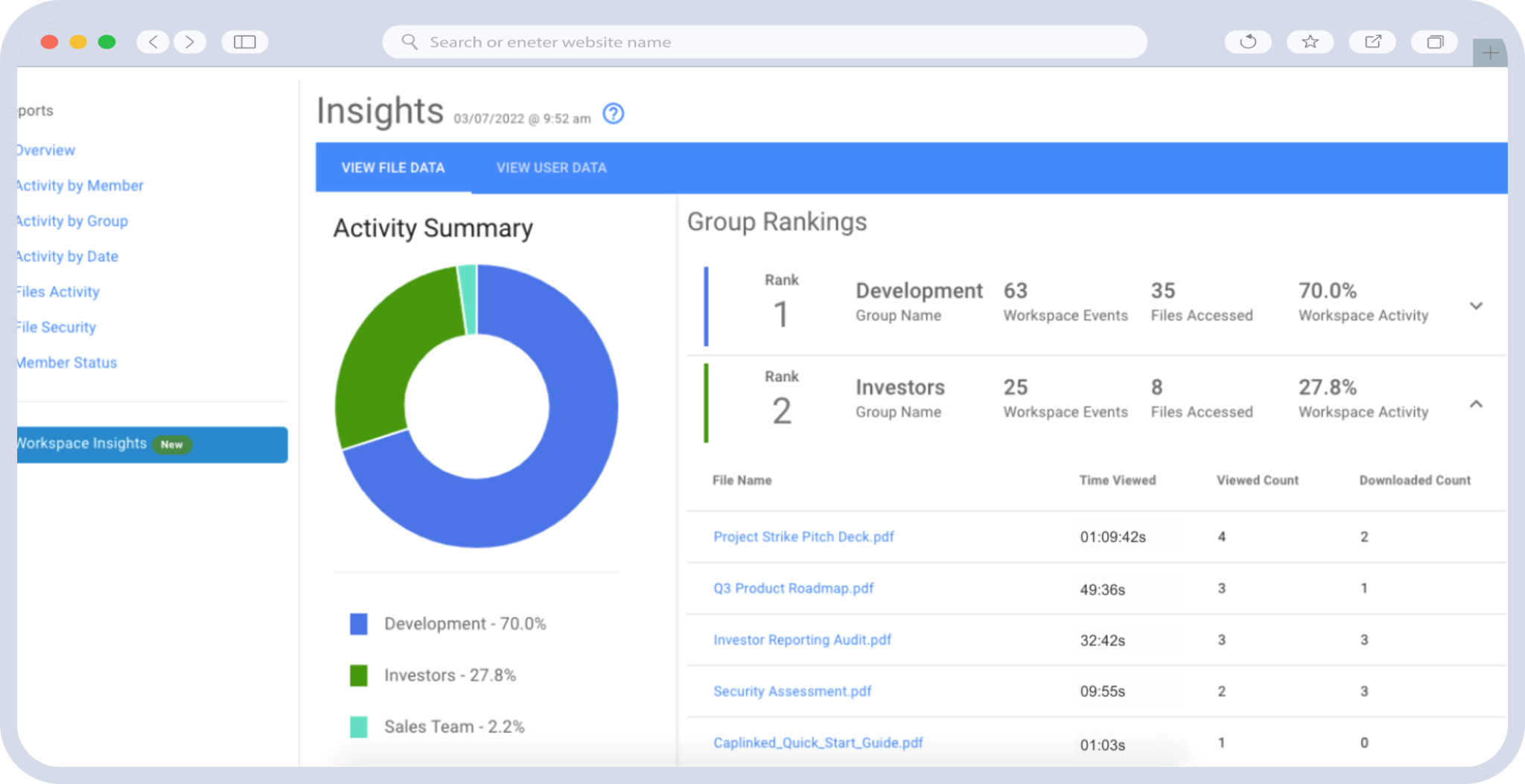
- Review access logs — Identify documents that haven’t been accessed (which may indicate they’re hard to find) and sections with unusually high Q&A activity (which may indicate organizational confusion).
- Validate permissions — Confirm that access controls still reflect the current stage of the transaction and that departing team members have been removed.
This maintenance discipline is what separates data rooms that accelerate deals from those that create friction. According to McKinsey & Company’s M&A practice research, disciplined deal execution processes — including information management — are strongly correlated with successful transaction outcomes.
Common VDR Organization Mistakes That Delay Due Diligence
Even experienced deal teams fall into organizational traps. Being aware of these common pitfalls helps you avoid the mistakes that most frequently derail timelines.
1. Over-Nesting Folders
Creating too many levels of sub-folders (five or more) forces reviewers to click through excessive layers to reach documents. Three levels of hierarchy is optimal for most transactions. If you need a fourth level, ensure it’s justified by the volume and variety of documents.
2. Dumping All Documents at Once Without Organization
Uploading hundreds of files in a single batch and sorting them later inevitably results in misplaced documents and naming inconsistencies. Organize documents before uploading, not after.
3. Ignoring Version Control
Multiple versions of the same document without clear version indicators create confusion and risk. Use version numbers or dates in file names and remove or archive superseded versions rather than leaving them alongside current files.
4. Failing to Anticipate Buyer Questions
Think about your folder structure from the buyer’s perspective. If an acquirer asks, “Where are the material contracts with your top ten customers?” the answer should be immediately obvious from your folder hierarchy. Organize around questions buyers will ask, not just around internal filing habits.
5. Neglecting Placeholder Folders
If a document isn’t available yet but will be, create a placeholder in the correct folder with a clear status note (e.g., “PENDING — Expected 2026-05-15”). This signals to reviewers that you’re aware of the gap and managing it proactively, which builds trust. An empty folder with no explanation creates anxiety.
How Proper Organization Delivers Measurable ROI
The business case for investing time in secure file sharing organization is compelling. Deal teams that implement structured VDR organization consistently report:
- 30–40% reduction in due diligence review time — Reviewers spend less time searching and more time analyzing.
- 50–60% fewer Q&A threads related to document location — Questions shift from “Where is this?” to substantive deal matters.
- Faster closing timelines — When every reviewer can work efficiently from day one, the entire deal cadence accelerates.
- Stronger seller credibility — A well-organized data room signals operational maturity and transparency, which positively influences buyer perception and valuation discussions.
- Reduced legal and advisory costs — When lawyers and accountants can find documents quickly, they bill fewer hours for administrative tasks.
The Harvard Business Review’s coverage of M&A best practices has repeatedly highlighted that information asymmetry and poor communication are primary causes of deal failure. A well-organized VDR directly addresses both issues by making information accessible, transparent, and easy to verify.
Getting Started: Your VDR Organization Action Plan
If you’re preparing for a transaction, here’s a practical checklist to ensure your virtual data room document organization supports — rather than hinders — the deal process:
- Week 1: Define your folder hierarchy and naming conventions. Get agreement from all internal stakeholders before uploading a single document.
- Week 2: Gather, digitize, and rename all documents according to your convention. Flag gaps with placeholders and assign owners responsible for sourcing missing materials.
- Week 3: Upload documents to the VDR in the established structure. Build your document index. Configure permission groups aligned with your folder hierarchy.
- Week 4: Conduct a dry run. Have an internal team member (ideally someone not involved in organizing) navigate the data room as a reviewer would. Note any points of confusion and resolve them before granting external access.
- Ongoing: Maintain weekly review cadence. Update the index. Monitor Q&A activity for organizational improvement signals.
Accelerate Your Next Deal with CapLinked
CapLinked’s virtual data room platform is purpose-built for the demands of M&A due diligence, fundraising, and complex transactions. With intuitive folder management, granular permission controls, built-in document indexing, and a setup process that takes just minutes, CapLinked gives deal teams the tools to implement every best practice outlined in this guide — without the complexity.
Start your free trial today and see how streamlined VDR document organization can transform your next transaction from a logistical challenge into a competitive advantage.
Frequently Asked Questions
What is virtual data room document organization?
Virtual data room document organization is the systematic process of structuring folders, naming files, and managing documents within a VDR to ensure efficient access and review during transactions such as M&A due diligence. Proper virtual data room document organization uses hierarchical folder structures, standardized naming conventions, and a comprehensive document index to help reviewers locate information quickly and securely.
How should I structure folders in a virtual data room for M&A due diligence?
Structure your VDR folders into numbered, high-level categories that mirror the major areas of due diligence — such as Corporate Governance, Financial Information, Material Contracts, Intellectual Property, and Legal & Regulatory. Within each top-level folder, create two to three levels of sub-folders to narrow document scope progressively. This approach aligns your virtual data room document organization with the workflow buyers and advisors will follow.
How does proper VDR document organization reduce due diligence time?
Well-organized virtual data rooms reduce due diligence review time by 30–40% because reviewers spend less time searching for documents and more time analyzing content. Consistent naming conventions, logical folder hierarchies, and a current document index eliminate confusion, reduce Q&A threads about document location, and allow multiple review workstreams to proceed in parallel without bottlenecks.
What file naming convention should I use in a virtual data room?
Use a standardized formula such as [Category Number]_[Document Type]_[Entity or Description]_[Date in YYYY-MM-DD format]. For example, “2.1_AuditedFinancials_ABCCorp_2025-12-31.pdf.” This naming convention ensures every file is searchable, sortable, and identifiable at a glance, which is critical for efficient virtual data room document organization during due diligence.
What are the most common VDR organization mistakes that delay M&A deals?
The most common mistakes include over-nesting folders beyond three levels, uploading documents in bulk without pre-organizing them, failing to implement version control, ignoring the buyer’s perspective when designing folder structures, and neglecting ongoing maintenance. These errors create confusion, generate unnecessary Q&A activity, and erode buyer confidence — all of which extend deal timelines.
Why is a data room index important for due diligence document management?
A data room index serves as the master roadmap for all documents in the VDR, listing each file’s reference number, title, description, upload date, and status. It enables reviewers to quickly verify document completeness and locate specific materials without browsing through folders. Keeping the index updated throughout the transaction is a core best practice of virtual data room document organization and signals professionalism to buyers and their advisors.
Frequently Asked Questions
The appropriate retention period depends on the transaction type, applicable regulations, and contractual obligations. As a general guideline, most M&A practitioners maintain VDR access for a minimum period aligned with the indemnification survival period specified in the purchase agreement—typically 12 to 24 months for general representations and up to six years for fundamental representations such as tax and authority. Financial records should generally be retained for at least seven years per IRS guidelines, and environmental records may require retention for 30 years or more. Organizations should develop a retention schedule that addresses each document category individually, rather than applying a single blanket retention period.
Access for non-winning bidders should be revoked promptly upon their elimination from the process or, at the latest, upon deal closing. Before revoking access, generate a final activity report for each user documenting what they accessed during the process. If NDA provisions require the return or destruction of confidential information, send formal notices to each bidder's legal counsel confirming access revocation and requesting certification of destruction of any downloaded materials. The VDR's audit trail provides documentation of what each party accessed, which may be relevant if confidentiality disputes arise later.
Organizations should conduct a data mapping exercise to identify any personal data contained within the VDR—employee records, customer information, and third-party contact details are common examples. Under GDPR Article 5, personal data must not be retained longer than necessary for the purpose for which it was processed. Establish lawful bases for continued retention (e.g., legitimate interest in defending potential legal claims, compliance with legal obligations), document these bases, and implement technical measures including encryption, access controls, and automated deletion triggers when retention periods expire. For cross-border transactions, ensure that any transfer of archived data complies with applicable data transfer mechanisms such as Standard Contractual Clauses.
A VDR platform suitable for full lifecycle management should offer read-only archive mode (preventing modifications while preserving access), continued encryption and security controls in archive state, preserved audit trails and activity logs, searchability and efficient document retrieval, granular access controls that can be maintained and updated during the retention period, automated notifications for retention period expirations, and the ability to generate secure export packages or destruction certificates. CapLinked's platform provides all of these capabilities, enabling organizations to transition seamlessly from active deal management to long-term secure archiving without migrating data to separate systems.
Post-transaction analysis of VDR analytics yields actionable insights across several dimensions. Review document access patterns to identify which areas received the most scrutiny—these often correspond to buyer concerns that could be proactively addressed in future transactions through improved documentation or operational remediation. Analyze Q&A logs to build a library of frequently asked questions and approved responses that can be deployed in future data rooms, significantly reducing response times. Evaluate the folder structure and document organization for usability, incorporating feedback from buyers and advisors to refine your taxonomy. Finally, use activity timing data to understand how long due diligence actually takes across different document categories, enabling more accurate process timeline planning for future transactions.
Failing to properly close down a VDR after a deal creates several material risks. Continued unauthorized access to sensitive business information exposes the organization to potential data breaches, competitive intelligence leakage, and confidentiality violations. Indefinite retention of personal data without a lawful basis can result in regulatory penalties—GDPR fines can reach up to €20 million or 4% of global annual turnover, whichever is higher. In litigation, an unmanaged data room may become subject to broad discovery requests, with the absence of proper retention and deletion protocols potentially giving rise to adverse inference arguments. Additionally, ongoing VDR subscription costs for unused data rooms represent a direct and unnecessary financial expense. A disciplined wind-down protocol mitigates all of these risks while preserving the data and records that have genuine long-term value.