The average M&A due diligence process takes between 30 and 90 days—but nearly half of that time is consumed by document gathering, access management, and manual back-and-forth between deal teams. For finance professionals and corporate development leaders managing complex transactions, every week of delay erodes deal value and increases the risk of a failed close. Virtual data room due diligence has emerged as the single most impactful workflow upgrade for deal teams looking to compress timelines, reduce risk, and maintain airtight security throughout the transaction lifecycle. This guide provides a practical, step-by-step framework for using VDR platforms to reduce your due diligence timeline by 30–40%, backed by real metrics and actionable best practices.
Table of Contents
ToggleWhy Traditional Due Diligence Fails Modern Deal Teams
Due diligence is the backbone of every M&A transaction. It’s the process through which buyers verify financial statements, legal obligations, intellectual property, customer contracts, and dozens of other critical data categories before committing capital. According to the U.S. Securities and Exchange Commission, thorough due diligence is fundamental to informed investment decisions and regulatory compliance.
Yet many organizations still rely on fragmented tools—email threads, consumer-grade file-sharing apps, and even physical data rooms—to manage this mission-critical process. The consequences are predictable:
- Version control chaos: Multiple document versions circulating across email chains lead to errors and misalignment between legal, financial, and operational review teams.
- Security vulnerabilities: Standard email encryption and consumer file-sharing platforms lack the granular permission controls, watermarking, and audit trail capabilities that M&A transactions demand.
- Timeline bloat: Manual document requests, delayed responses, and disorganized file structures can add weeks to the deal management process.
- Compliance exposure: Without comprehensive activity tracking, organizations cannot demonstrate regulatory compliance or reconstruct the diligence process if disputes arise post-close.
Virtual data rooms solve each of these problems systematically. Unlike consumer-grade alternatives, VDRs are purpose-built for high-stakes transactions, offering enterprise-grade security, structured document management for M&A, and real-time analytics that give deal teams unprecedented visibility into buyer engagement.
What Is Virtual Data Room Due Diligence?
Virtual data room due diligence refers to the use of a secure, cloud-based platform to organize, share, and manage the confidential documents that buyers, sellers, legal counsel, and advisors review during an M&A transaction. A VDR serves as the centralized digital repository where all diligence materials are uploaded, structured, permissioned, and tracked throughout the deal lifecycle.
As the Harvard Law School Forum on Corporate Governance has noted, the complexity and pace of modern M&A transactions require technology solutions that can scale with deal demands while maintaining security and compliance standards. A well-implemented VDR transforms due diligence from a static document review exercise into a dynamic, data-driven deal management process.
Key Capabilities That Define a Best-in-Class VDR
- Granular permission controls: Restrict document access at the folder, file, or even page level—ensuring that different buyer groups see only what they’re authorized to review.
- Dynamic watermarking: Automatically overlay user-specific watermarks on viewed or downloaded documents to deter unauthorized distribution.
- Comprehensive audit trails: Track every login, page view, download, and print action to create a complete forensic record of the diligence process.
- Q&A workflow management: Centralize buyer questions and seller responses within the platform, eliminating email-based back-and-forth.
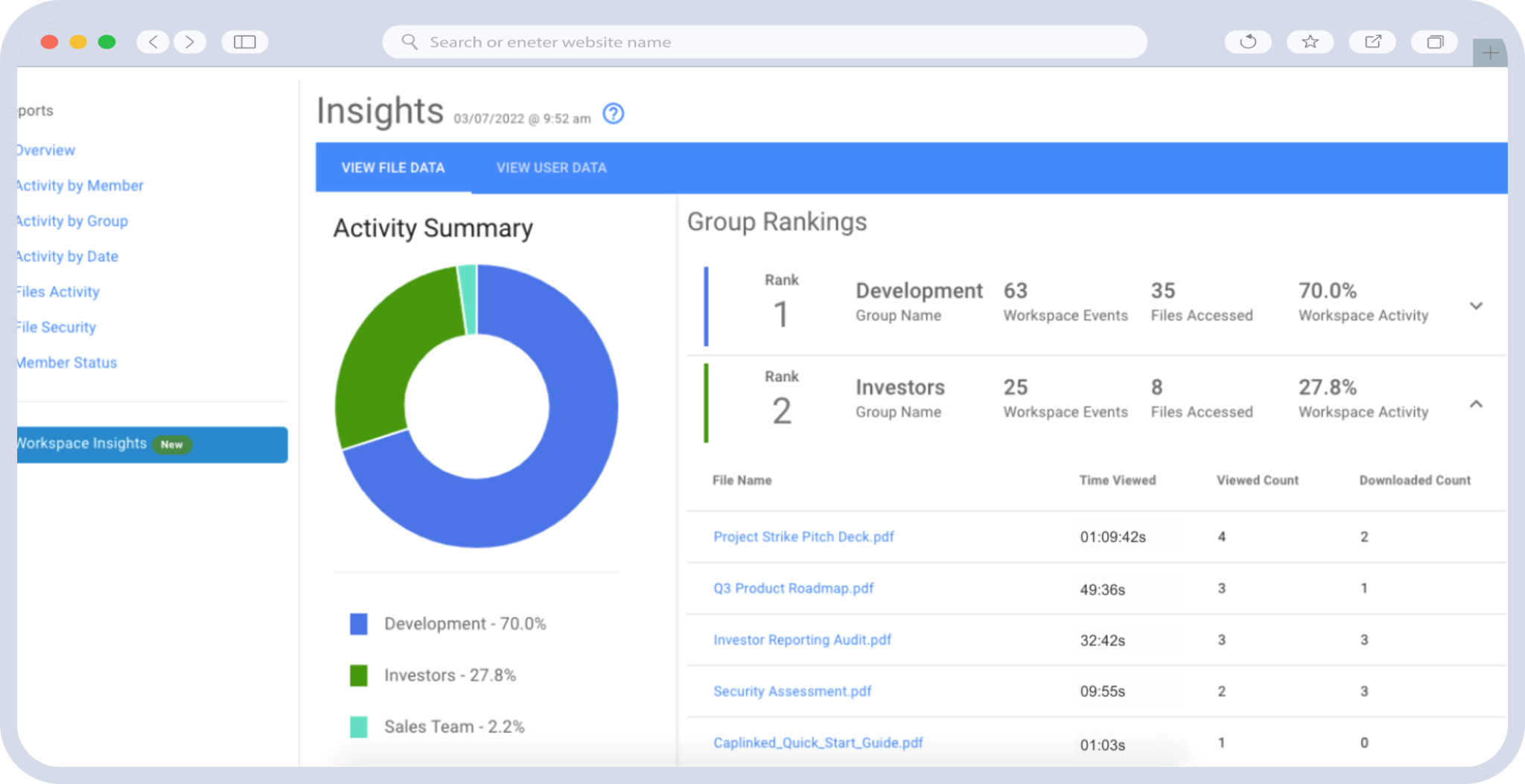
- Real-time analytics: Monitor which documents buyers are reviewing, how long they spend on each section, and where engagement drops off—giving sellers critical intelligence on buyer interest and intent.
Step-by-Step: How to Set Up Virtual Data Room Due Diligence for M&A
The following workflow is designed for sell-side deal teams, investment bankers, and corporate development professionals preparing for a transaction. Following this framework consistently can reduce due diligence timelines by 30–40% compared to traditional approaches.
Step 1: Define Your Document Index Before the Deal Goes Live
Before uploading a single file, create a comprehensive document index aligned with standard due diligence categories. A well-structured index typically includes 12–18 top-level categories:
- Corporate organization and governance documents
- Financial statements and auditor reports (3–5 years)
- Tax returns and compliance records
- Material contracts and customer agreements
- Intellectual property filings and registrations
- Employee and benefits information
- Real property and asset schedules
- Litigation and regulatory matters
- Insurance policies
- Environmental compliance records
- IT infrastructure and cybersecurity documentation
- Revenue and pipeline data
The American Bar Association’s Business Law Section provides extensive guidance on standard M&A due diligence checklists that can serve as a baseline for your index structure.
Step 2: Organize and Upload Documents Systematically
Upload documents into your VDR following your predefined index structure. Apply consistent naming conventions—include document type, date, and version number in each file name. For example: “Financial_AuditedStatements_FY2024_v2.pdf”.
Best-in-class M&A software solutions like CapLinked support bulk upload with automatic indexing, optical character recognition (OCR) for scanned documents, and drag-and-drop folder organization. This eliminates hours of manual file management and ensures that buyers can locate specific documents within seconds.
Pro tip: Upload and organize your data room 2–4 weeks before going to market. Pre-marketing preparation is one of the most overlooked VDR best practices, and it signals to buyers that the seller is organized and serious—which directly impacts deal velocity and valuation.
Step 3: Configure Permissions and Access Groups
Not every buyer or advisor should see every document at every stage. Configure role-based access groups that align with your deal structure:
- Phase 1 (Initial Interest): Provide access to a teaser set—executive summary, high-level financials, and market overview.
- Phase 2 (Signed NDA / Preliminary Due Diligence): Open access to detailed financial statements, key contracts, and organizational documents.
- Phase 3 (Final Due Diligence / Exclusivity): Grant full access to sensitive materials—litigation files, customer-level data, employment agreements, and IP documentation.
This phased approach to secure file sharing for deals protects the seller’s most sensitive information while keeping the process moving forward efficiently. CapLinked’s permission framework supports view-only, download, print, and no-access settings at every level of the document hierarchy.
Step 4: Invite Participants and Establish Communication Protocols
Send secure invitations to all deal participants—buyers, legal counsel, financial advisors, and internal team members. Establish clear protocols for how questions and document requests should flow:
- All buyer questions should be submitted through the VDR’s built-in Q&A module, not via email.
- Assign internal subject matter experts to specific diligence categories to ensure rapid, accurate responses.
- Set SLA expectations for response times (e.g., 24–48 hours for standard requests).
Centralizing communication within the VDR eliminates the single biggest source of delay in traditional due diligence: the fragmented, multi-channel information chase.
Step 5: Monitor Engagement and Optimize in Real Time
This is where virtual data room due diligence delivers a strategic advantage that no physical or email-based process can match. Use your VDR’s analytics dashboard to track:
- Buyer engagement depth: Which documents are being reviewed most frequently? Which sections are being ignored?
- Time-in-document metrics: Are buyers spending meaningful time on financial models and contracts, or just skimming?
- Download activity: Which files are buyers saving for offline review or sharing with their advisors?
- Q&A velocity: Are questions being asked and answered on schedule, or are bottlenecks forming?
These insights allow sell-side teams to prioritize follow-up conversations, identify disengaged buyers early, and proactively address areas of concern before they become deal-breakers.
Quantifying the Impact: How VDRs Reduce Due Diligence Timelines
According to research from McKinsey & Company’s M&A practice, technology-enabled deal processes consistently outperform traditional approaches in both speed and accuracy. Organizations that implement structured VDR workflows report measurable improvements across several key metrics:
- 30–40% reduction in due diligence timelines: Eliminating document request delays, centralizing Q&A, and enabling 24/7 global access compresses the review cycle significantly.
- 50%+ decrease in document-related errors: Version control, automatic indexing, and structured naming conventions eliminate the confusion that plagues email-based processes.
- 90%+ reduction in unauthorized access incidents: Granular permissions, dynamic watermarks, and comprehensive audit trails provide security that consumer-grade tools simply cannot match.
- Measurable improvement in buyer satisfaction: Organized, easily navigable data rooms signal professionalism and preparedness, which positively influences valuation discussions.
VDR Best Practices for M&A Due Diligence Success
Beyond the core workflow, experienced deal professionals follow several additional VDR best practices to maximize efficiency and minimize risk throughout the deal management process:
Start Early and Iterate
Begin populating your data room as soon as a transaction is being considered—not after the process has launched. Early preparation allows internal teams to identify gaps in documentation, resolve inconsistencies in financial records, and present a complete, polished package to prospective buyers.
Assign a Dedicated Data Room Administrator
Designate one team member as the primary VDR administrator responsible for managing uploads, permissions, Q&A routing, and analytics review. This single point of accountability prevents the confusion and duplication that arise when multiple people manage the platform independently.
Leverage Templates and Checklists
Use industry-standard due diligence checklists as templates for your folder structure. Most experienced M&A software solutions provide pre-built templates that align with common transaction types—asset sales, stock purchases, carve-outs, and cross-border deals.
Conduct a Pre-Launch Audit
Before granting buyer access, perform a thorough audit of every document in the room. Verify that sensitive information is properly redacted, file names are consistent, permissions are correctly configured, and no draft or incomplete documents are included. A single misplaced file can create legal liability or erode buyer confidence.
Archive the Data Room Post-Close
After the transaction closes, preserve a complete archive of the data room—including all documents, Q&A logs, and activity reports. This archive serves as a critical legal record and can be invaluable if post-closing disputes, indemnification claims, or regulatory inquiries arise.
Choosing the Right VDR Platform for Document Management in M&A
Not all virtual data rooms are created equal. When evaluating M&A software solutions, prioritize platforms that offer:
- Enterprise-grade security certifications (SOC 2 Type II, ISO 27001, GDPR compliance)
- Intuitive user experience that minimizes training time for both internal teams and external participants
- Flexible permission architecture that supports complex, multi-party deal structures
- Robust analytics and reporting that deliver actionable buyer engagement insights
- Responsive customer support with deal-experienced specialists available during critical transaction phases
- Competitive, transparent pricing without hidden per-page or per-user fees that can escalate costs unpredictably
CapLinked is trusted by deal teams at investment banks, private equity firms, law firms, and corporations worldwide to manage secure file sharing for deals of every size and complexity. With advanced document management for M&A, real-time analytics, and an intuitive interface designed for deal professionals, CapLinked helps teams close transactions faster and with greater confidence.
Accelerate Your Next Transaction with CapLinked
Whether you’re preparing for a sell-side process, managing buy-side due diligence across multiple targets, or coordinating a complex cross-border transaction, CapLinked’s virtual data room platform gives your team the tools to move faster without compromising security or compliance. Reduce your due diligence timeline, gain actionable insights into buyer behavior, and present your deal with the professionalism that drives premium valuations.
Start your free trial today and see how CapLinked can transform your deal management process from day one.
Frequently Asked Questions
Virtual data room due diligence is the process of using a secure, cloud-based platform to organize, share, and manage confidential documents during the due diligence phase of an M&A transaction. The VDR serves as a centralized repository where buyers, sellers, legal counsel, and advisors can review financial records, contracts, and other critical materials with granular access controls, audit trails, and real-time analytics. It replaces physical data rooms and insecure file-sharing methods with a purpose-built deal management solution.
A virtual data room reduces due diligence timelines by 30–40% through centralized document management, 24/7 global access, built-in Q&A workflows, and elimination of manual document request cycles. Instead of waiting days for email responses or courier deliveries, buyers can access organized, searchable documents instantly. Sellers can monitor engagement in real time and proactively address buyer concerns, keeping the process moving without unnecessary delays.
A comprehensive M&A data room typically includes corporate governance documents, audited financial statements (3–5 years), tax returns, material contracts, intellectual property filings, employee and benefits records, real property schedules, litigation summaries, insurance policies, environmental compliance records, IT and cybersecurity documentation, and revenue data. The specific requirements vary by transaction type, but most deal teams organize documents into 12–18 standard categories aligned with industry due diligence checklists.
Virtual data rooms provide enterprise-grade security features that consumer file-sharing apps and email cannot match, including granular permission controls at the folder, file, and page level; dynamic watermarking; comprehensive audit trails that log every user action; multi-factor authentication; and data-at-rest and in-transit encryption. These capabilities are essential for protecting confidential deal information and demonstrating regulatory compliance throughout the transaction process.
Key VDR best practices include creating a structured document index before uploading files, using consistent naming conventions, configuring phased access permissions aligned with deal stages, designating a dedicated data room administrator, centralizing all Q&A within the platform, conducting a pre-launch audit of all documents and permissions, and archiving the complete data room after closing. Starting preparation 2–4 weeks before going to market is also critical for presenting a professional, well-organized data room to prospective buyers.
When selecting a VDR for M&A, prioritize platforms with enterprise-grade security certifications (SOC 2 Type II, ISO 27001), intuitive user interfaces, flexible permission architectures for multi-party deals, robust analytics and reporting, responsive customer support from deal-experienced specialists, and transparent pricing. CapLinked offers all of these capabilities and is trusted by investment banks, private equity firms, and corporate deal teams worldwide for secure, efficient document management in M&A transactions.