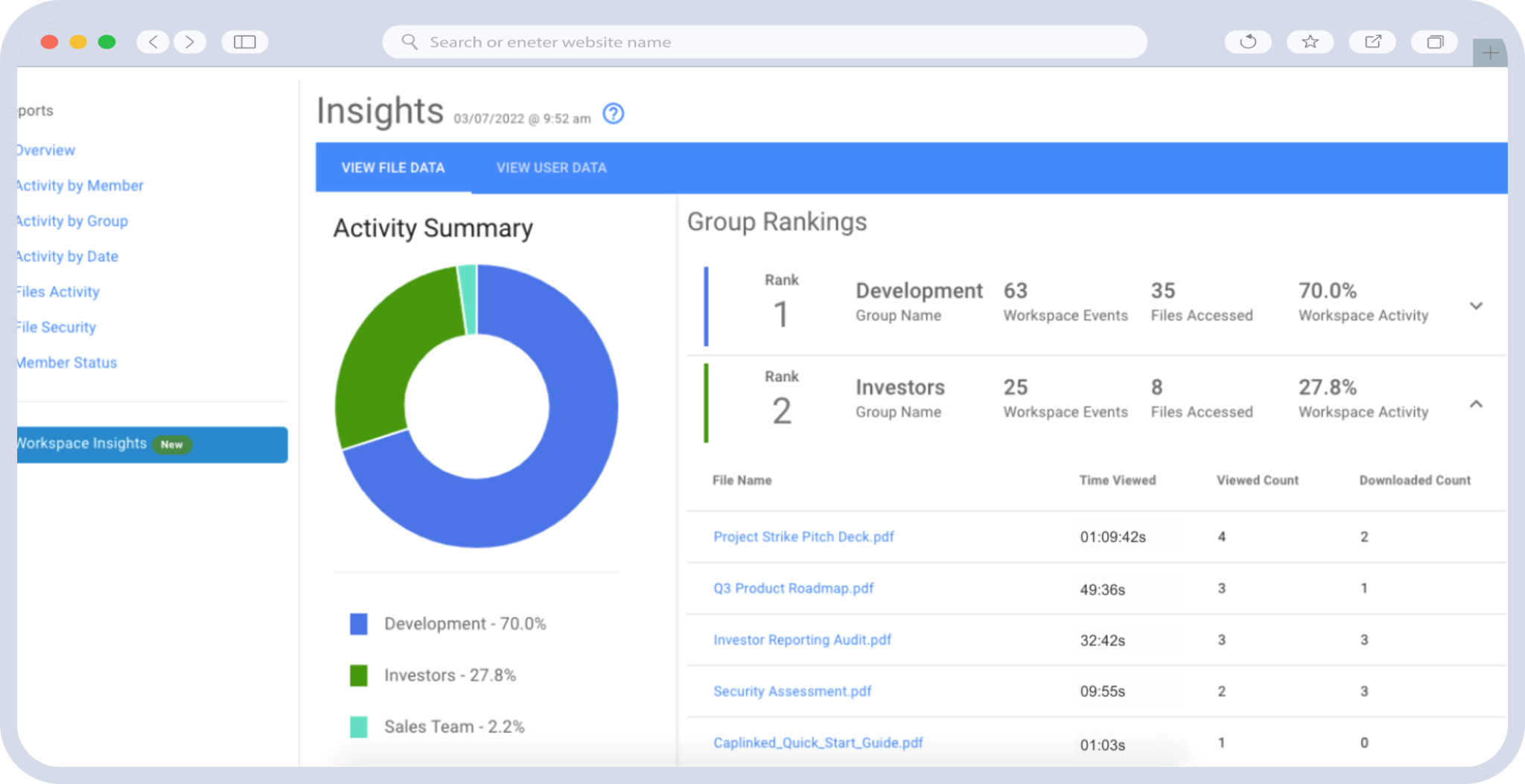
In Q1 2026 alone, software M&A deal value surpassed $287 billion—more than tripling the previous quarter. As mid-market deal volume accelerates, CFOs and deal managers face mounting pressure to move faster, spend less, and close cleaner. Yet many organizations still rely on legacy due diligence processes that quietly hemorrhage deal value through travel costs, advisory billable hours, and security exposure. The uncomfortable truth? Every week your team spends on manual document review is a week your competitors use to close their next acquisition. Understanding virtual data room ROI isn’t an academic exercise—it’s the financial case that separates modern deal teams from those still faxing NDAs.
This guide gives you the concrete metrics, frameworks, and calculation methods you need to justify VDR investment to your board, your CFO, or yourself. Whether you’re managing your first mid-market transaction or your fiftieth, you’ll walk away with a defensible cost-benefit analysis that addresses the budget approval pain point head-on.
Table of Contents
ToggleWhy Traditional Due Diligence Is More Expensive Than You Think
Before you can calculate virtual data room ROI, you need an honest accounting of what traditional due diligence actually costs. Most deal teams dramatically underestimate these figures because the expenses are distributed across multiple departments and budget lines.
Direct Cost Categories in Legacy Due Diligence
- Physical data room rental: Leasing a secure space for on-site document review typically runs $5,000–$25,000 per month, depending on market and security requirements.
- Travel and lodging: Buyer-side teams conducting on-site reviews incur airfare, hotels, and per diem expenses that can reach $2,000–$5,000 per person per trip. Multiply that across multiple bidders and review rounds.
- Courier and printing costs: Secure document delivery, bulk printing, binding, and shredding services add $3,000–$10,000 per transaction.
- Advisory billable hours: Legal, accounting, and consulting teams billing $300–$800 per hour spend significantly more time in physical data rooms due to sequential (rather than parallel) document access.
- Administrative overhead: Dedicated staff to manage physical access logs, copy requests, and document organization can represent 200+ person-hours per deal.
Hidden Costs That Erode Deal Value
Beyond direct expenses, traditional processes introduce costs that rarely appear on a spreadsheet but materially impact deal outcomes:
- Extended deal timelines: Every additional week a transaction stays open increases the risk of market shifts, competitive leaks, or buyer fatigue. According to McKinsey & Company’s M&A research, deal value erosion accelerates significantly after the first 90 days of active due diligence.
- Data breach exposure: Physical documents can be photographed, misplaced, or accessed by unauthorized personnel. The IBM Cost of a Data Breach Report pegged the average breach cost at $4.88 million in 2024—a figure that continues to climb.
- Competitive disadvantage: Sellers managing multiple bidders through physical rooms must coordinate sequential access, slowing the process and potentially losing impatient buyers.
The Four Dimensions of Virtual Data Room ROI
A comprehensive virtual data room ROI calculation accounts for four distinct value dimensions. Most mid-market transactions see a 10x to 50x return on VDR investment when all four are properly quantified.
1. Direct Cost Elimination
This is the easiest dimension to calculate and the most immediately compelling for budget approvals. A deal management platform eliminates or dramatically reduces:
- Physical room rental fees (100% elimination)
- Travel costs for document review (70–90% reduction)
- Printing, courier, and shredding expenses (95%+ elimination)
- Administrative staffing for document management (60–80% reduction)
Sample calculation for a mid-market deal ($50M–$500M transaction value):
Traditional due diligence direct costs: $75,000–$200,000
VDR subscription for a 3–6 month deal cycle: $5,000–$25,000
Net direct savings: $50,000–$175,000 per transaction
2. Time Savings and Deal Acceleration
Time is the most valuable—and most undervalued—component of M&A software cost savings. Research consistently shows that VDRs compress deal timelines significantly. Document gathering and organization alone can be reduced from 15–20 days to 5–7 days using pre-populated VDR structures, and parallel access enables multiple buyer teams to conduct reviews simultaneously rather than sequentially.
For mid-market transactions, a well-implemented VDR typically reduces the overall due diligence phase by 30–40%. Here’s how to translate that into dollars:
- Advisory fee reduction: If your legal team bills $500/hour and your VDR saves 100 hours of review time, that’s $50,000 in direct savings per workstream.
- Carrying cost reduction: Every month a deal remains open carries financing costs, management distraction costs, and opportunity costs. For a $100M transaction, monthly carrying costs typically range from $50,000 to $150,000.
- Revenue acceleration: Closing 30 days sooner means capturing synergies and revenue 30 days earlier—a figure that can dwarf the VDR investment many times over.
3. Risk Reduction and Compliance Value
The secure file sharing business value of a VDR extends well beyond convenience. Enterprise-grade virtual data rooms provide granular access controls, dynamic watermarking, audit trails, and remote document revocation that collectively reduce legal and regulatory exposure.
The U.S. Securities and Exchange Commission has increasingly scrutinized cybersecurity practices in financial transactions, making robust data governance a regulatory expectation rather than a nice-to-have. Similarly, compliance with frameworks such as SOC 2 Type II and GDPR is significantly easier when your document management infrastructure is purpose-built for sensitive transactions.
How to quantify risk reduction:
- Estimate the probability of a data incident during your deal (industry average: 5–10% for deals using email and consumer file-sharing tools)
- Multiply by the potential cost of that incident (legal liability, regulatory fines, deal collapse, reputational damage)
- Compare against the near-zero incident rate for enterprise VDR platforms with proper access controls
Even a conservative calculation—5% probability × $500,000 potential impact = $25,000 in expected risk cost—easily justifies VDR pricing for most mid-market transactions.
4. Deal Outcome Improvement
This is the dimension most organizations overlook, yet it often represents the largest component of virtual data room ROI. A well-organized, professionally managed data room signals operational maturity to buyers, which directly impacts valuation multiples and bid competition.
According to Harvard Business Review’s M&A research, information asymmetry is one of the primary drivers of valuation discounts in acquisitions. When buyers can efficiently access, search, and analyze comprehensive documentation, they gain confidence—and confident buyers bid higher.
- Higher bid prices: Sellers who provide clean, well-indexed data rooms consistently report higher initial offers and less aggressive re-trading during diligence.
- More competitive processes: VDRs enable sellers to run broader, more competitive auction processes by supporting simultaneous multi-party access without compromising confidentiality.
- Lower deal failure rates: Deals collapse when surprises emerge late in diligence. Organized, proactive disclosure through a VDR reduces last-minute discoveries that kill transactions.
A Step-by-Step Framework for Calculating Your VDR ROI
Use this framework to build a defensible business case for deal management platform pricing approval. Each step produces a concrete number you can present to decision-makers.
Step 1: Baseline Your Current Costs
Audit your last two to three transactions and tally every cost associated with document management, review coordination, and information security. Include internal labor costs, not just external invoices. Be thorough—this baseline is the foundation of your ROI case.
Step 2: Estimate Time Savings
Map your current due diligence timeline and identify the stages where due diligence efficiency gains are most significant: document collection, Q&A management, access coordination, and compliance verification. Apply conservative reduction estimates (25–35%) and multiply saved days by daily carrying costs and advisory rates.
Step 3: Quantify Risk Exposure
Work with your legal team to estimate the probability and potential cost of a data incident under your current process. Even a basic expected-value calculation demonstrates meaningful risk-adjusted savings.
Step 4: Model Deal Outcome Impact
This requires judgment, but even small improvements matter at scale. If a professional data room increases your final sale price by just 0.5% on a $100M transaction, that’s $500,000 in additional value—against a VDR cost of perhaps $15,000.
Step 5: Calculate Total ROI
Sum all four dimensions and divide by your projected VDR cost:
ROI = (Direct Savings + Time Value + Risk Reduction + Deal Outcome Improvement) ÷ VDR Investment Cost
For most mid-market transactions, this formula yields returns of 10x–50x, making VDR adoption one of the highest-ROI technology investments available to deal teams.
Common Objections—and How to Address Them
“We Already Use Shared Drives and Email”
Consumer-grade tools lack audit trails, granular permissions, dynamic watermarking, and remote revocation. They also create significant regulatory exposure. The Federal Trade Commission’s data protection guidance makes clear that organizations are expected to implement security measures proportionate to the sensitivity of the information they handle. M&A documents are among the most sensitive information any business possesses.
“Our Deals Are Too Small to Justify the Cost”
Modern VDR pricing has become remarkably accessible, with per-deal costs starting in the low thousands. When you factor in even modest time savings on advisory fees, the ROI math works for transactions as small as $5M–$10M. The global VDR market—valued at $2.42 billion in 2024 and projected to reach $7.73 billion—has grown precisely because the economics work across the full deal-size spectrum.
“Our Team Doesn’t Have Time to Learn New Software”
Modern VDRs are designed for non-technical users. Intuitive interfaces, drag-and-drop uploads, and pre-built folder templates mean most teams are fully operational within hours, not weeks. The time invested in setup is recovered many times over during the deal itself.
Making the Business Case: What CFOs Need to See
When presenting a VDR investment case to financial decision-makers, lead with the numbers. CFOs respond to three things: quantified savings, risk mitigation, and competitive benchmarking.
- Present a side-by-side comparison of your last deal’s actual costs against projected VDR-enabled costs using the framework above.
- Highlight the risk narrative: One data incident during an active transaction can cost more than a decade of VDR subscriptions.
- Reference market adoption: With the VDR industry growing at approximately 7.9% annually, your competitors and counterparties are already using this technology. Not adopting puts you at a process and credibility disadvantage.
The budget approval pain point that delays technology adoption almost always stems from insufficient quantification. The framework in this guide gives you the specific numbers and methodology to overcome that barrier.
Start Quantifying Your Virtual Data Room ROI Today
Every deal your organization runs without a purpose-built virtual data room is a deal where you’re leaving money on the table—in direct costs, advisory hours, risk exposure, and deal outcomes. The ROI case isn’t theoretical; it’s arithmetic.
CapLinked’s virtual data room platform is built for mid-market deal teams who demand enterprise-grade security, intuitive usability, and transparent pricing. Whether you’re managing sell-side diligence, buy-side review, or multi-party transactions, CapLinked gives you the tools to close faster, spend less, and protect your most sensitive information.
Request a demo or start a free trial at CapLinked.com and see how much your next deal could save.
Frequently Asked Questions
What is virtual data room ROI and how is it measured?
Virtual data room ROI measures the total financial return a deal team gains from investing in a VDR compared to traditional due diligence methods. It is calculated across four dimensions: direct cost elimination, time savings from deal acceleration, risk reduction value, and deal outcome improvement. Most mid-market M&A transactions see a 10x to 50x return on VDR investment when all four dimensions are quantified.
How much does a virtual data room cost for an M&A transaction?
Virtual data room pricing for mid-market M&A transactions typically ranges from $5,000 to $25,000 for a 3–6 month deal cycle, depending on storage volume, user count, and feature requirements. This compares favorably to traditional due diligence costs of $75,000–$200,000 or more per transaction when physical room rental, travel, printing, and additional advisory hours are included.
How does a virtual data room reduce M&A deal timelines?
A virtual data room reduces M&A deal timelines by enabling parallel document access for multiple parties, automating Q&A workflows, and compressing document gathering from 15–20 days to 5–7 days with pre-built folder structures. Overall, VDRs typically reduce the due diligence phase by 30–40%, which translates directly into lower advisory fees, reduced carrying costs, and faster synergy capture.
Why should CFOs invest in a virtual data room instead of using free file-sharing tools?
CFOs should invest in a virtual data room because consumer file-sharing tools lack the granular permissions, audit trails, dynamic watermarking, and regulatory compliance features required for sensitive M&A transactions. The risk of a data breach using inadequate tools—averaged at $4.88 million per incident according to IBM—far exceeds the cost of a purpose-built VDR. Additionally, VDRs provide measurable M&A software cost savings through reduced advisory hours and accelerated deal timelines.
What is the average ROI of a virtual data room in mid-market M&A?
The average virtual data room ROI in mid-market M&A ranges from 10x to 50x the initial investment when accounting for direct cost savings, time value, risk mitigation, and deal outcome improvements. For a typical $100M transaction, even conservative estimates show $150,000–$500,000 in total value creation against a VDR cost of $10,000–$20,000.
How do virtual data rooms improve due diligence efficiency and security?
Virtual data rooms improve due diligence efficiency by centralizing all transaction documents in a searchable, indexed repository with role-based access controls and automated workflows. Security features including 256-bit encryption, dynamic watermarking, remote document revocation, and comprehensive audit logs ensure compliance with SEC cybersecurity expectations and data protection regulations like GDPR. These capabilities collectively reduce both the time and risk associated with the due diligence process.