A single missing document. An unrevoked access permission. An incomplete audit trail. Any one of these oversights can stall a multimillion-dollar transaction, erode buyer confidence, and introduce regulatory risk that derails months of deal preparation. Yet for many deal teams, VDR audit preparation remains an afterthought—something addressed reactively rather than strategically. The gap between selecting a virtual data room and actually executing a clean, audit-ready transaction is where deals succeed or fail. This guide bridges that gap with practical, actionable steps to ensure your virtual data room is fully prepared for buyer audits, investor scrutiny, and regulatory reviews.
Table of Contents
ToggleWhy VDR Audit Preparation Is a Deal-Critical Priority
In mergers and acquisitions, due diligence is the moment of truth. Buyers, investors, and their legal teams will scrutinize every document, every permission setting, and every access log inside your virtual data room. According to the U.S. Securities and Exchange Commission’s guidance on disclosure and reporting, companies involved in material transactions must ensure documentation is accurate, complete, and accessible to authorized parties. A poorly organized or non-compliant VDR doesn’t just slow things down—it raises red flags that can reduce valuations or kill deals entirely.
Virtual data room compliance isn’t a checkbox exercise. It’s a systematic process that encompasses document integrity, access governance, regulatory alignment, and real-time auditability. Deal teams that invest in thorough VDR audit preparation consistently close faster, negotiate from positions of strength, and avoid the costly surprises that plague underprepared sellers.
Step 1: Conduct a Comprehensive Document Inventory and Gap Analysis
The foundation of M&A audit readiness is knowing exactly what you have, what you’re missing, and what needs updating. Before any buyer gains access to your data room, your documentation must be complete, current, and organized.
Build Your Due Diligence Documentation Checklist
Start by mapping your documents against a standardized due diligence framework. At minimum, your VDR should contain clearly organized folders covering:
- Corporate governance: Articles of incorporation, bylaws, board minutes, organizational charts, shareholder agreements
- Financial records: Audited financial statements (3–5 years), tax returns, accounts receivable/payable aging reports, budget forecasts
- Contracts and agreements: Customer contracts, vendor agreements, partnership arrangements, lease agreements, loan documents
- Intellectual property: Patents, trademarks, copyrights, IP assignment agreements, licensing arrangements
- Regulatory and compliance: Permits, licenses, regulatory filings, environmental assessments, data privacy policies
- Human resources: Employment agreements, benefit plans, organizational charts, pending litigation or disputes
- Litigation and legal: Pending or threatened litigation, settlement agreements, regulatory investigations
Identify and Remediate Documentation Gaps
Cross-reference your inventory against buyer expectations and industry-specific due diligence standards. The American Institute of CPAs (AICPA) SOC framework provides useful benchmarks for evaluating whether your documentation meets the controls and compliance standards that institutional buyers expect. Flag any expired contracts, unsigned agreements, or documents pending legal review, and assign ownership and deadlines for remediation immediately.
Practical tip: Create a master tracking spreadsheet that lists every required document, its current status (complete, in progress, missing), the responsible party, and the target completion date. This becomes your single source of truth throughout the preparation process.
Step 2: Establish and Verify Secure File Access Controls
Documentation completeness means nothing if unauthorized parties can access sensitive information—or if authorized parties can’t access what they need. Secure file access controls are both a compliance requirement and a trust signal to buyers and their counsel.
Implement Granular, Role-Based Permissions
Your VDR should support permissions at the folder, subfolder, and individual document level. Best practices for access control configuration include:
- Define user roles clearly: Separate access tiers for deal team leads, legal counsel, financial advisors, potential buyers (by stage), and internal administrators
- Apply the principle of least privilege: Grant each user the minimum level of access required for their role—view-only, download, print, or edit
- Stage-gate access: Restrict certain folders (e.g., employee records, sensitive IP) to later-stage buyers who have signed enhanced confidentiality agreements
- Use watermarking and copy protection: Dynamic watermarks that display user identity on viewed or downloaded documents create accountability and deter unauthorized distribution
- Set document expiration dates: Automatically revoke access to time-sensitive materials after defined periods
Conduct an Access Control Audit Before Go-Live
Before opening the data room to external parties, perform a full access control review. Verify that every user account is associated with a legitimate, active participant. Remove test accounts, former team members, and any permissions that were configured during setup but are no longer appropriate. Document this review—auditors and compliance officers will want to see evidence that access governance was verified prior to the transaction.
The EU General Data Protection Regulation (GDPR) Article 25 mandates data protection by design and by default, meaning that access controls should be proactively configured to limit data exposure—not reactively adjusted after a breach or complaint. For cross-border transactions, GDPR compliance in your VDR is not optional; it’s a legal obligation.
Step 3: Configure and Test Audit Trail Capabilities
A comprehensive audit trail is the backbone of VDR audit preparation. It provides an irrefutable, time-stamped record of every action taken within the data room—and it’s often the first thing compliance teams and legal advisors review.
What Your Audit Trail Must Capture
Your VDR’s audit logging should record, at minimum:
- Every user login and logout, with timestamps and IP addresses
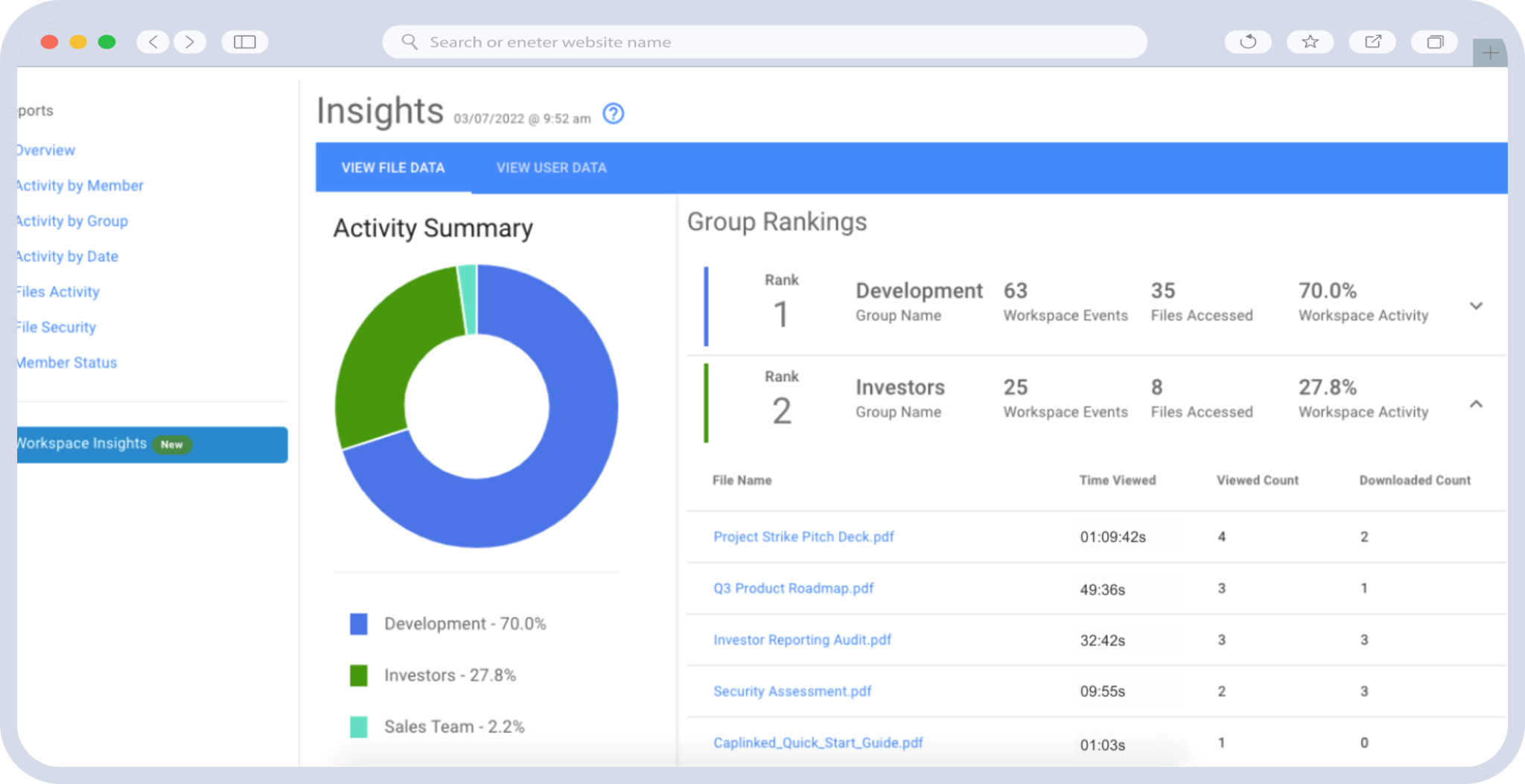
- Documents viewed, including duration of viewing time
- Documents downloaded, printed, or shared
- Permission changes and user account modifications
- Q&A submissions and responses
- NDA and terms-of-access click-throughs and acceptances
- Upload and deletion activity, with user attribution
Validate Audit Trail Accuracy and Exportability
Run test scenarios before the data room goes live. Have team members perform specific actions—log in, view a document, download a file, submit a Q&A question—and then verify that the audit log accurately reflects each activity. Confirm that audit reports can be exported in standard formats (PDF, CSV, Excel) for inclusion in compliance packages and legal filings. Incomplete or inaccurate audit trails undermine the credibility of the entire due diligence process.
Step 4: Align Your VDR with Regulatory and Industry Compliance Standards
Every transaction operates within a regulatory framework, and your virtual data room must demonstrate compliance with the standards relevant to your deal, industry, and jurisdictions involved.
Key Compliance Frameworks for Virtual Data Room Operations
Depending on your transaction type and geography, your virtual data room compliance posture should align with one or more of the following:
- SOC 2 Type II: Validates that your VDR provider maintains rigorous controls over security, availability, processing integrity, confidentiality, and privacy
- ISO 27001: The international standard for information security management systems, widely recognized in cross-border transactions
- GDPR: Mandatory for transactions involving EU personal data; requires data minimization, purpose limitation, and documented processing activities
- HIPAA: Required when healthcare-related data is shared during due diligence in U.S. healthcare transactions
- FINRA and SEC regulations: Relevant for financial services transactions requiring specific recordkeeping and data retention standards
The National Institute of Standards and Technology (NIST) Cybersecurity Framework is an excellent baseline for evaluating your VDR’s security posture, particularly the framework’s emphasis on identifying, protecting, detecting, responding to, and recovering from cybersecurity events. Many institutional buyers will benchmark your security controls against NIST standards during their review.
Document Your Compliance Posture
Don’t assume buyers will take compliance for granted. Prepare a compliance summary document that outlines your VDR provider’s certifications, your organization’s data handling policies, and the specific measures you’ve implemented for the transaction. Include encryption standards (at rest and in transit), data residency information, and breach notification procedures. Proactively sharing this information accelerates due diligence and builds buyer confidence.
Step 5: Organize Your Data Room for Reviewer Efficiency
A well-structured data room isn’t just about compliance—it’s about credibility. When buyers and their advisors can navigate your VDR intuitively, they spend less time searching and more time evaluating. This translates directly to faster due diligence cycles and stronger deal momentum.
Data Room Structure Best Practices
- Use a standardized folder taxonomy: Organize top-level folders by category (Corporate, Financial, Legal, IP, HR, Operations, Regulatory) with logically nested subfolders
- Apply consistent naming conventions: Use descriptive, date-stamped file names (e.g., “Audited_Financial_Statements_FY2024.pdf”) rather than cryptic internal codes
- Include an index document: A master index at the root level that maps every document to its folder location, with brief descriptions, dramatically reduces reviewer frustration
- Number documents sequentially: Auto-numbering features help reviewers reference specific documents efficiently in Q&A and negotiation discussions
- Remove duplicates and drafts: Only final, executed versions of documents should be in the data room unless prior versions are specifically relevant
Step 6: Prepare Your Team and Establish Operational Protocols
Technology alone doesn’t ensure M&A audit readiness. Your team’s preparedness and operational discipline are equally critical.
Train All Internal Users
Every team member with data room access should understand their responsibilities, the sensitivity of the information they’re handling, and the specific protocols for uploading, modifying, and managing documents. Common training topics include:
- How to upload documents correctly and verify they appear in the right folders
- Protocol for responding to Q&A inquiries within defined SLAs
- Escalation procedures for access requests, permission changes, and potential security incidents
- Confidentiality obligations and consequences of unauthorized disclosure
Designate a Data Room Administrator
Assign a dedicated VDR administrator who serves as the single point of accountability for the data room throughout the transaction. This person manages user access, monitors audit logs for anomalies, coordinates document uploads, and serves as the primary liaison with the VDR provider’s support team. In high-stakes transactions, having a responsive, knowledgeable administrator can mean the difference between a seamless review and a frustrating, delay-prone process.
Step 7: Perform a Pre-Audit Readiness Review
Before opening your data room to buyers, investors, or regulators, conduct a comprehensive readiness review that simulates the actual audit experience.
Your VDR Audit Preparation Checklist
- ☐ All required documents uploaded, current, and in final form
- ☐ Folder structure follows standardized taxonomy with master index
- ☐ Role-based permissions configured and verified for every user group
- ☐ Watermarking, copy protection, and NDA gates activated
- ☐ Audit trail tested and validated for accuracy and completeness
- ☐ Compliance documentation prepared and accessible (certifications, policies, encryption details)
- ☐ Q&A module configured with appropriate routing and response workflows
- ☐ All team members trained on operational protocols
- ☐ Data room administrator designated with clear escalation authority
- ☐ Test access performed by an external party to validate the reviewer experience
This final review is your quality gate. Any issues identified here are infinitely easier—and less costly—to resolve before external parties gain access than after the due diligence clock starts ticking.
Avoid Common VDR Audit Preparation Mistakes
Even experienced deal teams make avoidable errors. Watch for these common pitfalls:
- Starting too late: VDR audit preparation should begin weeks or months before buyer access, not days. Document remediation, legal reviews, and compliance verification take time.
- Overlooking version control: Uploading superseded drafts alongside final versions creates confusion and potential legal exposure. Implement strict version control protocols.
- Ignoring the Q&A workflow: Buyer questions that go unanswered for days signal disorganization. Pre-assign Q&A responsibilities and establish response time targets.
- Failing to revoke access post-transaction: Once a deal closes—or a party withdraws—immediately revoke their VDR access. Lingering permissions are a security and compliance risk, as highlighted in guidance from the Federal Trade Commission’s “Start with Security” framework.
Set Your Deal Up for Success with CapLinked
Thorough VDR audit preparation is one of the highest-leverage activities deal teams can undertake. It accelerates due diligence, reduces compliance risk, strengthens your negotiating position, and signals to buyers that your organization operates with rigor and transparency.
CapLinked’s virtual data room platform is purpose-built for high-stakes transactions, delivering enterprise-grade security, granular access controls, comprehensive audit trails, and an intuitive interface that makes due diligence documentation management seamless. Whether you’re preparing for an M&A transaction, capital raise, regulatory review, or board audit, CapLinked gives your deal team the tools to be audit-ready from day one.
Start your free trial with CapLinked today and experience how a properly configured virtual data room transforms your audit readiness and deal execution.
Frequently Asked Questions
VDR audit preparation is the process of organizing, verifying, and securing all documents, access controls, and compliance measures within a virtual data room before it is opened to buyers, investors, or regulators for due diligence review. It matters because incomplete documentation, misconfigured permissions, or missing audit trails can delay transactions, reduce valuations, and introduce regulatory risk that may derail a deal entirely.
Deal teams should begin VDR audit preparation a minimum of four to eight weeks before anticipated buyer or investor access, though earlier is better for complex transactions. This timeline allows sufficient time for document inventory, gap remediation, legal review, access control configuration, compliance verification, and team training. Starting early prevents the rushed, error-prone preparation that frequently causes deal delays.
Essential due diligence documentation includes corporate governance records, audited financial statements, tax returns, material contracts, intellectual property filings, regulatory permits and licenses, employment agreements, benefit plan details, pending litigation records, and data privacy policies. The specific requirements vary by industry and transaction type, but comprehensive coverage of these categories is standard for most M&A and capital raise transactions.
Secure file access controls protect a virtual data room by ensuring that only authorized users can view, download, or interact with specific documents based on their role and deal stage. Granular, role-based permissions, dynamic watermarking, document expiration settings, and NDA gates work together to prevent unauthorized disclosure and create accountability. These controls are essential for maintaining compliance with regulations such as GDPR and for preserving attorney-client privilege during transactions.
A compliant VDR audit trail should record every user login and logout with timestamps and IP addresses, all document views with duration, downloads, prints, permission changes, Q&A activity, NDA acceptances, and any upload or deletion events attributed to specific users. This comprehensive logging provides an irrefutable record of data room activity that satisfies regulatory requirements and enables deal teams to demonstrate proper governance during and after the transaction.
Virtual data room compliance requirements vary based on the industry, transaction type, and jurisdictions involved. Healthcare transactions in the United States require HIPAA compliance, financial services deals must adhere to SEC and FINRA recordkeeping standards, and any transaction involving EU personal data must comply with GDPR. Deal teams should identify applicable frameworks early in the VDR audit preparation process and verify that their VDR provider holds relevant certifications such as SOC 2 Type II and ISO 27001.