In high-stakes transactions such as mergers, acquisitions, asset sales, and fundraising, the right virtual data room (VDR) can make or break the deal. But not every deal team uses a VDR the same way.
The needs of a buy-side user differ significantly from those of someone managing the sell side. Understanding this distinction is crucial to selecting a VDR platform that aligns with your goals and keeps your deal on track.
In this post, we’ll break down the VDR features that matter most when comparing buy vs sell side priorities.
Table of Contents
ToggleWhat’s the Difference Between Buy Side and Sell Side?
Before diving into features, let’s clarify the two basic roles:
- Sell-side teams are typically responsible for packaging up company information, disclosing it to potential buyers or investors, and managing access to sensitive data. They want speed, control, and airtight confidentiality.
- Buy-side teams are reviewing that information to evaluate risks, assess value, and make informed decisions. Their priorities revolve around transparency, usability, and access to key insights.
In the buy vs sell side dynamic, both groups need access to the same data, but how they interact with that data couldn’t be more different.
Features That Matter for Sell-Side Users
The sell side is often responsible for setting up and managing the data room. That makes administrative control and security absolutely essential.
1. Granular Permission Settings
Sell-side teams need to control exactly who sees what. That includes:
- Folder-level and document-level permissions
- View-only or download-restricted access
- Watermarking by user identity
- Time-limited access or expiring links
These features are critical for safeguarding confidential materials during a deal and protecting against leaks.
2. Activity Tracking and Audit Trails
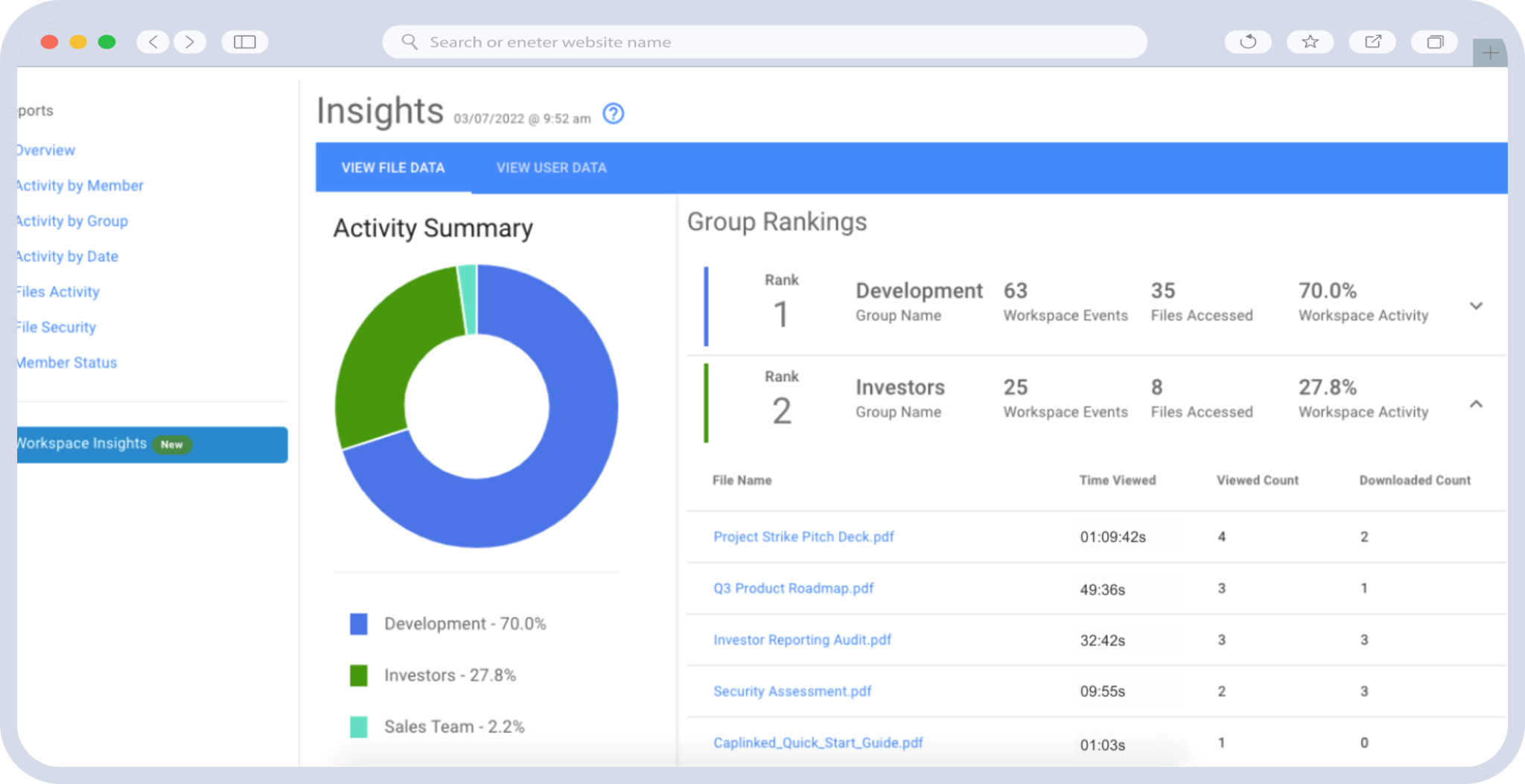
Knowing who accessed what and when can help detect issues early and demonstrate compliance. Detailed audit logs also give sellers leverage during negotiations.
For example, if a buyer spends a lot of time reviewing a specific area (e.g., legal exposure or outstanding debt), that behavior may signal potential concerns. Equally, if they spend very little time interacting with your data, that may indicate a lack of interest.
3. Fast Upload and Organization Tools
On the sell side, businesses that move fast are more likely to clinch the right buyer. A modern VDR should make it easy to:
- Bulk upload documents
- Drag and drop documents
- Apply consistent naming conventions
Platforms like CapLinked even offer Enterprise Concierge Services to guide your team through the upload and setup process, ensuring the data room is fully organized before buyers are invited in.
4. Dynamic Watermarking and Document Security
Sell-side teams need to ensure documents can’t be copied, downloaded, or misused. Features like dynamic watermarking (with user ID and timestamp) and document locking help mitigate the risk of sensitive information being leaked or misappropriated.
Features That Matter to Buy-Side Users
For buy-side users, the goal is simple: get in, find what matters, and evaluate the deal efficiently.
1. Powerful Search and Filter Tools
Buy-side teams often face tight timelines for due diligence. They may be combing through thousands of documents, so robust search functionality is non-negotiable.
Features to look for include:
- Full-text search with filters by tag, date, or document type
- OCR (optical character recognition) for scanned documents
- Saved search queries
In a buy vs sell side comparison, buyers prioritize ease of navigation and information discovery more than control over access.
2. Integration with Analytical Tools
Buyers may need to download and analyze data in Excel or integrate with modeling software. Platforms that support exports in flexible formats or connect to existing BI tools streamline the process.
API-driven platforms like CapLinked make it easier to move from diligence to modeling without losing time on manual data transfers.
3. Seamless Collaboration Tools
The buy side typically includes analysts, legal teams, advisors, and C-suite stakeholders, all of whom need to collaborate on document reviews.
Top VDRs support:
- Commenting or Q&A features
- Secure internal messaging
- Version control for documents
In the buy vs sell side split, collaboration is often more pronounced for buyers, who rely on cross-functional teamwork to assess the deal’s viability.
Features That Benefit Both Sides
Some features matter no matter which side of the deal you’re on.
1. Audit Logs and Compliance Reporting
Whether you’re selling a business or considering buying one, audit trails provide protection. Regulators, investors, and legal teams all rely on this metadata to validate the integrity of the transaction.
2. Mobile Access
Being able to view and approve documents on the go—without sacrificing security—is a must in fast-paced environments. Look for VDRs that offer mobile-friendly access with secure login features, like two-factor authentication.
3. Concierge Support for Setup and User Training
CapLinked offers a premium Concierge service that handles the setup and onboarding process on your behalf. This is especially helpful for sell-side teams short on time or unfamiliar with VDR technology. It also benefits buy-side users by ensuring the room is well-organized and easy to navigate from day one.
Concierge support can include guidance with:
- Folder setup
- Permission configuration
- Upload assistance
- User training sessions
This is where buy vs sell side priorities overlap, with both sides benefitting from a streamlined, professionally managed data environment.
Buy vs Sell Side: Which VDR Platform Wins?
Choosing the right data room provider is ultimately about aligning your organization’s goals with the platform’s strengths.
For sell-side users, prioritize:
- Admin control
- Advanced permissions
- Watermarking and audit trails
For buy-side teams, focus on:
- Search tools
- Collaboration features
- Export and integration capabilities
Some platforms try to do both, but only a few do it well. CapLinked stands out by offering enterprise-grade security, a clean interface, and Concierge-level support that adapts to your role in the transaction.
CapLinked: One Platform, Many Use Cases
In the buy vs sell side equation, success depends on having the right tools for your role. The seller wants protection and control. The buyer needs speed and clarity. The best virtual data rooms recognize both needs and deliver tailored experiences that work in parallel.
Whether you’re leading the charge to divest a business unit or conducting diligence on your next acquisition, don’t settle for a generic file-sharing tool. A CapLinked VDR is built for serious transactions on either side of the table.
To streamline your next deal, schedule a demo with CapLinked and see how their platform empowers both buy- and sell-side teams to close with confidence.